Meadow bistort (Polygonum bistorta)
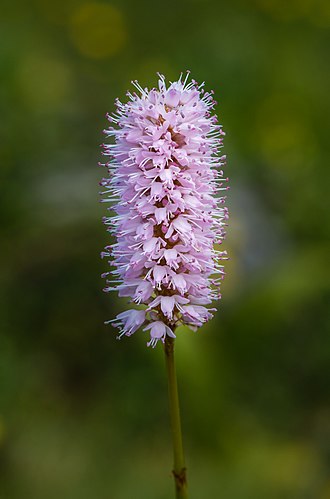
At a glance
- Lifecycle
- Perennial (hardy)
- Exposure
- Full sun
- Frost limit
- −34.4 °C
Cultivation
Succeeds in an ordinary garden soil. A very cold-hardy plant, tolerating temperatures down to at least -25°c. Bistort was formerly cultivated as a medicinal and edible plant, though it has now fallen into virtual disuse. Plants are somewhat spreading, forming quite extensive colonies.
Propagation
Seed - sow spring in a cold frame. Germination is usually free and easy. When they are large enough to handle, prick the seedlings out into individual pots and plant them out in the summer if they have reached sufficient size. If not, overwinter them in a cold frame and plant them out the following spring after the last expected frosts. Division in spring or autumn. Very easy, larger divisions can be planted out direct into their permanent positions. We have found that it is better to pot up the smaller divisions and grow them on in light shade in a cold frame until they are well established before planting them out in late spring or early summer.
Edible uses
Leaves - raw or cooked. Seed - raw or cooked. The seed is very small and rather fiddly to utilize[K]. Root - raw or cooked.
Medicinal uses
Bistort is one of the most strongly astringent of all herbs and it is used to contract tissues and staunch blood flow. The root is powerfully astringent, demulcent, diuretic, febrifuge, laxative and strongly styptic. The leaves are astringent and have a great reputation in the treatment of wounds.
Material uses
The roots contain up to 21% tannin.
Habitat
Damp meadows and by water, especially on acid soils.
Native range
Northern and central Europe, including Britain, mountains of S. Europe, western and central Asia.
Scientific synonyms Bistorta officinalis