English elm (Ulmus procera)
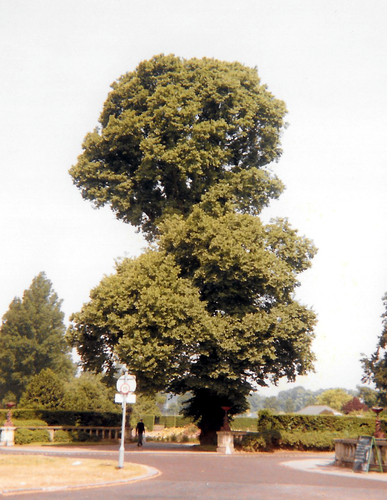
At a glance
- Lifecycle
- Perennial (hardy)
- Exposure
- Full sun
- Frost limit
- −23.3 °C
Cultivation
Prefers a fertile soil in full sun. The English elm is susceptible to 'Dutch elm disease', a disease that has destroyed the greater part of all the elm trees growing in Britain. Mature trees killed back by the disease will often regrow from suckers, but these too will succumb when they get larger. There is no effective cure (1992) for the problem, but most E. Asian, though not Himalayan, species are resistant to the disease so the potential exists to develop new resistant hybrids with the native species. A food plant for the caterpillars of many lepidoptera species.
Propagation
Seed - if sown in a cold frame or outdoor seedbed as soon as ripe it usually germinates in a few days. A high proportion of the seed is not viable but seed is normally freely produced and can be sown thickly to take into account the poor viability. Stored seed does not germinate so well and should be sown in early spring. When they are large enough to handle, prick the seedlings out into individual pots and grow them on in the greenhouse for their first winter. Plant them out into their permanent positions in late spring or early summer, after the last expected frosts. Plants should not be allowed to grow for more than two years in a nursery bed since they form a tap root and will then move badly. Layering of suckers or coppiced shoots.
Edible uses
Leaves - raw or cooked[2, 179, K]. They can be a little bit bitter, especially if not very young, and have a mucilaginous texture[K]. They make a nice addition to a mixed salad[K]. Immature fruits, used just after they are formed - raw. Inner bark - cooked. A mucilaginous texture. A tea is made from the leaves.
Medicinal uses
The dried inner bark is anti-inflammatory, astringent, demulcent, mildly diuretic, resolvent, tonic and vulnerary. The sap has been used in the treatment of baldness. The leaves are astringent and have been powdered then used in the treatment of haemorrhoids. The plant is used in Bach flower remedies - the keywords for prescribing it are 'Occasional feelings of inadequacy', 'Despondency' and 'Exhaustion from over-striving for perfection'. A homeopathic remedy is made from the inner bark.
Material uses
A fibre from the inner bark is very tough. Tannin and a dyestuff are obtained from the inner bark. No details of the colour are given. Wood - close-grained, free from knots, very durable under water, fairly hard, elastic, withstands abrasion and salt water, but does not take a high polish. It is used for water pipes, wheels, mallet heads, ships keels etc.
Habitat
Hedgerows, by woods and roads, less frequent in the north.
Native range
Western and southern Europe, including Britain.