Garden leek (Allium porrum)
At a glance
- Lifecycle
- Biennial
- Exposure
- Full sun
- Ideal germination temperature
- 24 °C
- Germination time
- 10–21 days
- Time to harvest
- 75–130 days
- Frost limit
- −10 °C
Cultivation
Prefers a sunny position in a light well-drained soil. Tolerates a pH in the range 5.2 to 8.3. The leek is a widely cultivated vegetable, there are many named varieties. Young plants are often planted quite deeply in the soil (8 - 10cm deep) in order to blanch the lower stem, it is also a common practice to earth up the growing plants in order to blanch right the way up the stems. Whilst this does make the stems more tender, it also results in a loss of minerals and vitamins. Although commonly treated as a biennial, this plant is a true perennial, perennating by means of small lateral growths and often developing a roundish bulb at the base of the main growth. The bulbs should be planted fairly deeply. Grows well with most plants, especially roses, carrots, celery, celariac, beet and chamomile, but it inhibits the growth of legumes. Members of this genus are rarely if ever troubled by browsing deer.
Propagation
Seed - for an early crop, or for larger plants, sow the seed in early spring in a greenhouse and plant out in May. For smaller or later plants, sow April in an outdoor seedbed and plant out as space permits in July or even August.
Edible uses
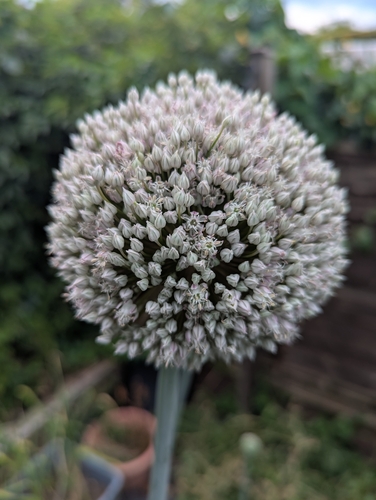
The leaves and long white blanched stem are eaten cooked. A mild onion flavour with a delightful sweetness[183, K]. Bulb - raw or cooked. The bulb is produced in the plants second year of growth (that is, after it is normally harvested). The bulb is somewhat larger if the plant is prevented from flowering[K]. Flowers - raw. Used as a garnish on salads, though they are rather on the dry side and less pleasant than many other members of the genus[K].
Medicinal uses
This species has the same medicinal virtues as garlic, but in a much milder and less effective form. These virtues are as follows:- Garlic has a very long folk history of use in a wide range of ailments, particularly ailments such as ringworm, Candida and vaginitis where its fungicidal, antiseptic, tonic and parasiticidal properties have proved of benefit. The bulb is said to be anthelmintic, antiasthmatic, anticholesterolemic, antiseptic, antispasmodic, cholagogue, diaphoretic, diuretic, expectorant, febrifuge, stimulant, stomachic, tonic, vasodilator.
Material uses
The juice of the plant is used as a moth repellent. The whole plant is said to repel insects and moles.
Habitat
Not known in wild.
Native range
Original habitat is obscure.
Scientific synonyms Allium ampeloprasum