Blue columbine (Aquilegia caerulea)
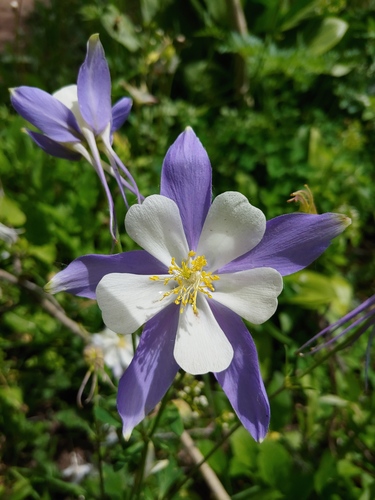
At a glance
- Lifecycle
- Perennial (hardy)
- Exposure
- Full sun
- Frost limit
- −40 °C
Cultivation
Succeeds in ordinary garden soil, preferring a moist but not wet soil and a sheltered sunny position. A very ornamental plant, it is the state flower of Colorado. Most species are short-lived, dying out after 2 - 3 years, though they usually produce seed prolifically. Plants seem to be immune to the predations of rabbits. A greedy plant, inhibiting the growth of nearby plants, especially legumes.
Propagation
Seed - best sown as soon as it is ripe in a cold frame. The seed can be slow to germinate. Stored seed can be sown in late winter in a cold frame. When large enough to handle, prick the seedlings out into individual pots and grow them on in a cold frame for their first winter. Plant out in late spring or early summer. Division in spring.
Edible uses
Flowers - raw. Rich in nectar, they have a sweet taste, they make a very attractive addition to mixed salads and can also be used as a thirst-quenching munch in the garden[K].
Medicinal uses
Antispasmodic, diaphoretic, parasiticide, resolvent, salve. The seed was chewed, or an infusion of the root was used, to treat abdominal pains and general sickness.
Material uses
The seed is used as a parasiticide to rid the hair of lice.
Habitat
A wide range of habitats, especially in aspen groves.
Native range
Western N. America - Montana to Arizona and New Mexico.
Scientific synonyms Aquilegia coerulea
Same genus
- Columbine (Aquilegia vulgaris)
- Red columbine (Aquilegia canadensis)
- Oil shale columbine (Aquilegia barnebyi)
- Smallflower columbine (Aquilegia brevistyla)
- Golden columbine (Aquilegia chrysantha)
- Colorado blue columbine (Aquilegia coerulea)
- Desolation columbine (Aquilegia desolatica)
- Western red columbine (Aquilegia elegantula)