Yellowroot (Xanthorhiza simplicissima)
Other names brook-feather, shrub yellowroot, Shrubby Yellow-root
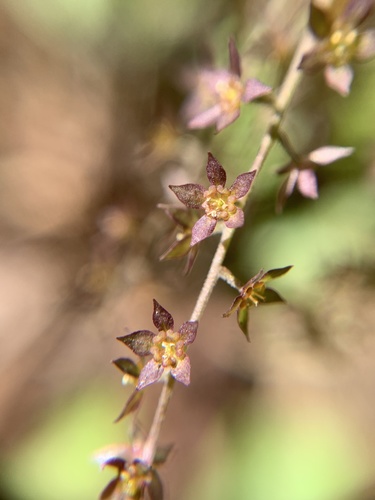
At a glance
- Lifecycle
- Perennial (hardy)
- Exposure
- Full sun
- Frost limit
- −23.3 °C
Cultivation
Requires a moist acid soil in sun or part shade. Hardy to about -20°c. Plants can spread considerably by means of suckers. A greedy plant, inhibiting the growth of nearby plants, especially legumes.
Propagation
Seed - best sown in a cold frame as soon as it is ripe in the autumn. Sow stored seed in a cold frame in late winter. When they are large enough to handle, prick the seedlings out into individual pots and grow them on in the greenhouse for at least their first winter. Plant them out into their permanent positions in late spring or early summer, after the last expected frosts. Division in the autumn or late winter.
Medicinal uses
The root is astringent and a blood tonic. Some caution is advised in the use of this plant, see the notes above on toxicity. The root contains the alkaloid 'berberine' which is used for its tonic properties and for digestive disorders.
Material uses
A yellow dye is obtained from the root. A good ground cover for damp semi-shaded positions.
Habitat
Damp woods, thickets and the banks of streams.
Native range
Eastern N. America - New York to West Virginia and south to Florida and Alabama.