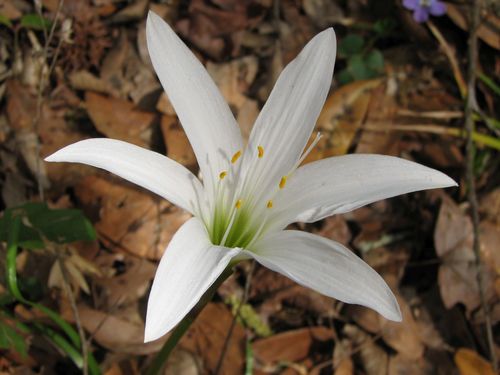
Atamasco lily (Zephyranthes atamasca)
At a glance
- Exposure
- Full sun
- Frost limit
- −12.2 °C
Cultivation
Requires a position in full sun when grown outdoors in Britain and a well-drained moisture retentive soil. A very ornamental plant. However, because it is in growth during the winter, it is generally best grown in a cold greenhouse or special bulb frame[K]. Bulbs should be planted about 10cm deep.
Propagation
Seed - sow spring in a greenhouse. Sow the seed thinly so that the seedlings can be left undisturbed in the pot for their first year of growth. Give them an occasional liquid feed in the growing season to ensure they do not become nutrient deficient. When the plants become dormant in the summer, pot up the small bulbs placing 2 - 3 bulbs in each pot. Grow them on for another one or two years in the greenhouse before planting them out when they are dormant in late summer. Division of offsets after the plant dies down in late spring or early summer. Larger bulbs can be planted out direct into their permanent positions whilst it is best to pot up the smaller bulbs and grow them on in the greenhouse for a year before planting them out.
Edible uses
Bulb - cooked. Caution is advised, see the notes above on toxicity.
Habitat
Damp woods.
Native range
Southern N. America - Missouri and Virginia to Florida.
Same genus
- Autumn zephyrlily (Zephyranthes candida)
- Citron zephyrlily (Zephyranthes citrina)
- Proctor's zephyrlily (Zephyranthes proctorii)
- Puerto Rico zephyrlily (Zephyranthes puertoricensis)
- Showy zephyrlily (Zephyranthes pulchella)
- Refugio zephyrlily (Zephyranthes refugiensis)
- Cuban zephyrlily (Zephyranthes rosea)
- Redmargin zephyrlily (Zephyranthes simpsonii)