Abutilon pictum
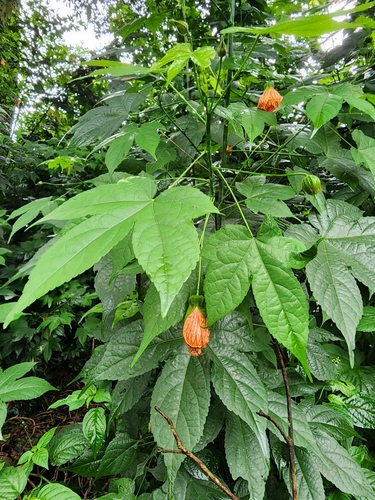
At a glance
- Lifecycle
- Perennial (hardy)
- Exposure
- Full sun
- Frost limit
- −6.7 °C
Cultivation
Requires a sunny position or part day shade in a fertile well-drained soil. This species is only hardy in the very mildest areas of Britain, being intolerant of temperatures that fall much below 0°c. A very ornamental plant, there are several named varieties. Tip-prune young plants to promote a bushy habit. Plants in this genus are notably resistant to honey fungus.
Propagation
Seed - sow spring in a greenhouse. Germination should take place within a few weeks. Once the seedlings are large enough to handle, prick them out into individual pots. Grow them on for at least the first winter in a greenhouse and plant out in late spring or early summer, after the last expected frosts. Cuttings of young shoots, June in a frame. Grow on in the greenhouse for their first winter and plant out in spring after the last expected frosts. Cuttings of half-ripe wood, July/August in a frame. Grow on in the greenhouse for their first winter and plant out in spring after the last expected frosts.
Edible uses
Flowers - raw or cooked. A delicious sweet flavour[K]. The flowers produce nectar all the time they are open so, assuming the plant is grown indoors and is not visited by pollinating insects, the sweetness increases the longer the flower is open[K].
Habitat
Cultivated as an ornamental plant, it is not known in a truly wild situation.
Native range
S. America - Brazil, Argentina, Paraguay and Uruguay.
Scientific synonyms Callianthe picta
Same genus
- Florida Keys Indian mallow (Abutilon hirtum)
- Mauve (Abutilon hulseanum)
- Parish's Indian mallow (Abutilon parishii)
- Coastal Indian mallow (Abutilon permolle)
- Yellowflower Indian mallow (Abutilon reventum)
- Velvetleaf (Abutilon theophrasti)
- Wright's Indian mallow (Abutilon wrightii)
- Viscid mallow (Abutilon viscosum)