Siberian yarrow (Achillea sibirica)
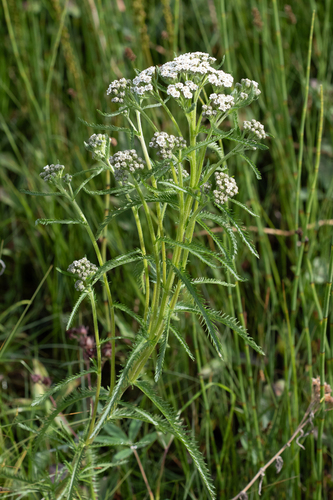
At a glance
- Lifecycle
- Perennial (hardy)
- Exposure
- Full sun
- Frost limit
- −23.3 °C
Cultivation
Succeeds in most soils but prefers a well-drained soil in a sunny position. A very ornamental plant. Polymorphic. Hybridizes freely with other members of this genus.
Propagation
Seed - sow spring or early autumn in a cold frame. When large enough to handle, prick the seedlings out into individual pots and plant them out in the summer. Division in spring or autumn. Very easy, the divisions can be planted direct into their permanent positions. Basal cuttings of new shoots in spring. Very easy, collect the shoots when they are about 10cm tall, potting them up individually in pots and keeping them in a warm but lightly shaded position. They should root within 3 weeks and will be ready to plant out in the summer.
Edible uses
Young shoots and leaves - cooked.
Medicinal uses
The whole plant is antibacterial, anti-inflammatory, antibacterial, carminative, diaphoretic, emmenagogue, odontalgic, stomachic and tonic.
Habitat
Meadows, gardens, sandy slopes and dry areas.
Native range
E. Asia - China, Japan. North-western N. America.
Scientific synonyms Achillea alpina