Aconitum rotundifolium
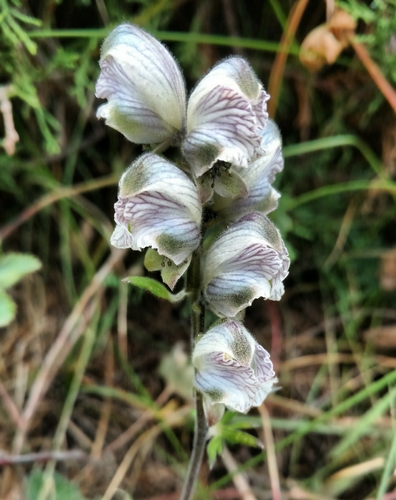
At a glance
- Lifecycle
- Perennial (hardy)
- Exposure
- Full sun
Cultivation
Thrives in most soils and in the light shade of trees. Prefers a calcareous soil. Grows well in open woodlands. Members of this genus seem to be immune to the predations of rabbits and deer. A greedy plant, inhibiting the growth of nearby species, especially legumes. Closely related to A. napellus.
Propagation
Seed - best sown as soon as it is ripe in a cold frame. When large enough to handle, prick the seedlings out into individual pots and grow them on in a cold frame for their first winter. Plant them out in late spring or early summer. Division - best done in spring but it can also be done in autumn.
Edible uses
Leaves - cooked, but this report should be treated with some scepticism due to the highly toxic nature of the genus in general[K].
Habitat
Stony slopes in the alpine and sub-alpine zone.
Native range
Central Asia from Afghanistan to Tibet and eastern Russia.
Same genus
- Aconite (Aconitum napellus)
- Yellow monkshood (Aconitum anthora)
- Columbian monkshood (Aconitum columbianum)
- Larkspurleaf monkshood (Aconitum delphiniifolium)
- Monkshood (Aconitum lycoctonum)
- Kamchatka aconite (Aconitum maximum)
- Northern blue monkshood (Aconitum noveboracense)
- Southern blue monkshood (Aconitum uncinatum)