Aconitum septentrionale
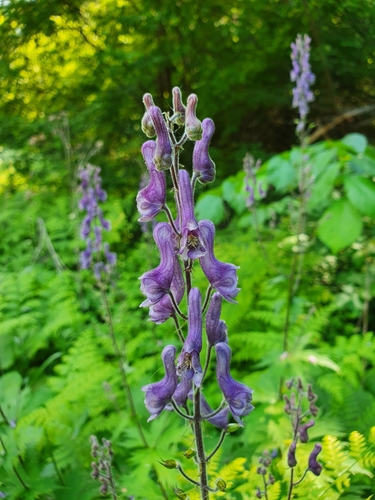
At a glance
- Lifecycle
- Perennial (hardy)
- Exposure
- Full sun
Cultivation
Thrives in most soils and in the light shade of trees. Prefers a calcareous soil. Plants are hardy to about -25°c. Grows well in open woodlands. Members of this genus seem to be immune to the predations of rabbits and deer. This species is no more than part of A. lycoctonum according to some botanists. A greedy plant, inhibiting the growth of nearby species, especially legumes.
Propagation
Seed - best sown as soon as it is ripe in a cold frame. When large enough to handle, prick the seedlings out into individual pots and grow them on in a cold frame for their first winter. Plant them out in late spring or early summer. Division - best done in spring but it can also be done in autumn.
Edible uses
Root - boiled. This report should be treated with great caution due to the toxic nature of the genus[K]. Young leaves - used as a potherb but this must be treated with extreme caution[K].
Habitat
Forest margins and rich meadows.
Native range
N. Europe.
Same genus
- Aconite (Aconitum napellus)
- Yellow monkshood (Aconitum anthora)
- Columbian monkshood (Aconitum columbianum)
- Larkspurleaf monkshood (Aconitum delphiniifolium)
- Monkshood (Aconitum lycoctonum)
- Kamchatka aconite (Aconitum maximum)
- Northern blue monkshood (Aconitum noveboracense)
- Southern blue monkshood (Aconitum uncinatum)