Actinidia lanceolata
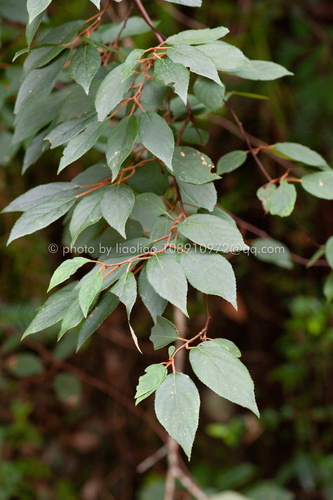
At a glance
- Exposure
- Full sun
- Frost limit
- −23.3 °C
Cultivation
Prefers a sound loamy neutral soil. Young spring growth is susceptible to frost damage. Fruits are formed on second year wood and also on fruit spurs on older wood. This is a climbing plant, supporting itself by twining around branches etc. Plants in this genus are notably resistant to honey fungus. Dioecious. Male and female plants must be grown if seed is required.
Propagation
Seed - sow spring in a greenhouse. Cuttings of softwood as soon as ready in spring in a frame[K]. Cuttings of half-ripe wood, July/August in a frame. Very high percentage. Cuttings of ripe wood, October/November in a frame.
Edible uses
Fruit - raw or cooked. The fruit is very small, about 10mm x 7mm. It contains a number of small seeds, but these are easily eaten with the fruit[K].
Habitat
Mountain slopes or along river banks, 200 - 600 metres in S. Chekiang, S. Kiangsi, Fukien and N. Kwangtung.
Native range
E. Asia - S.E. China.