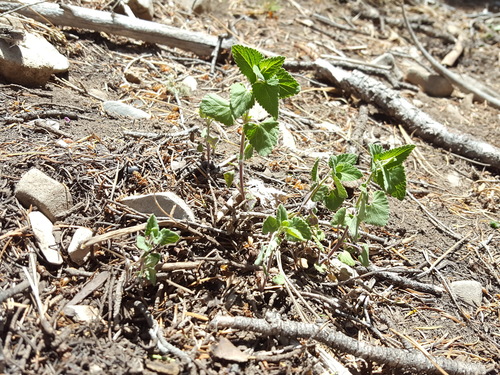
New Mexico Giant Hyssop (Agastache neomexicana)
At a glance
- Lifecycle
- Perennial (hardy)
- Exposure
- Full sun
- Frost limit
- −12.2 °C
Cultivation
We have very little information on this species and do not know if it will be hardy in Britain. The closely related A. pallidiflora (some authorities consider this species to be no more than a sub-species of A. pallidiflora) is hardy in the milder areas of the country The following notes are based on the general needs of the genus. Prefers a warm sunny sheltered position and a well-drained soil. Succeeds in most soils. The flowers are very attractive to bees.
Propagation
Seed - sow spring in a greenhouse and only just cover the seed. The seed usually germinates in 1 - 3 months at 13°c. Prick out the seedlings into individual pots when they are large enough to handle and grow them on in the greenhouse for their first year. Plant out in late spring or early summer[K]. Division in spring. Fairly simple, if large divisions are used it is possible to plant them straight out into their permanent positions. Basal cuttings of young shoots in spring. Harvest the young shoots when they are about 10 - 15cm tall and pot them up in a lightly shaded position in a greenhouse. They should root within 3 weeks and can be planted out in the summer or following spring.
Edible uses
The highly aromatic young leaves are used as a flavouring in cooked dishes. The young leaves are used to make a herbal tea.
Medicinal uses
The dried and pulverized root has been used as a dusting powder for sores and cankers. The plant has been used in the treatment of fevers and bad coughs.
Habitat
Not known
Native range
South-western N. America.
Same genus
- Trans-Pecos giant hyssop (Agastache breviflora)
- Blue giant hyssop (Agastache foeniculum)
- Agastache mexicana
- Korean mint (Agastache rugosa)
- Mosquito plant (Agastache cana)
- Cusick's giant hyssop (Agastache cusickii)
- San Luis Mountain giant hyssop (Agastache mearnsii)
- Smallleaf giant hyssop (Agastache parvifolia)