Albuca canadensis
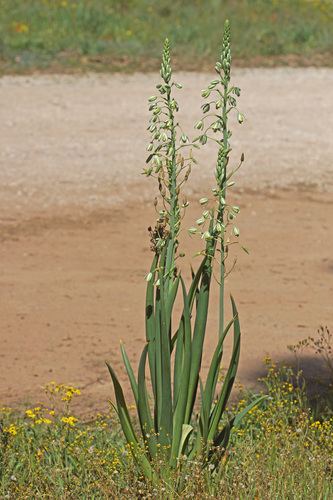
At a glance
- Exposure
- Full sun
- Frost limit
- −12.2 °C
Cultivation
Requires a sheltered position in full sun in a light well-drained soil. Succeeds outdoors in areas where frosts are short-lived and light, to a minimum of -5°, and in such areas grow well in a wild or informal garden. This species is closely related to A. major and that species is included here by some botanists.
Propagation
Seed - we have no details for this species but suggest sowing the seed in a greenhouse in a light well-drained compost as soon as it is ripe if possible, otherwise in spring. Sow the seed thinly so that the young plants can be grown on in the same pot for their first year of growth. Apply a liquid feed from time to time if the seedlings look as though they need nutrients and prick them out at the end of their first growing season. Grow on the plants for at least their next winter in a greenhouse and plant out when the bulbs are dormant in late summer or early autumn. Division of offsets in late summer.
Edible uses
The succulent stems are chewed to allay thirst. This use is listed for A. major, but since this species is so closely related it almost certainly has the same use[K].
Habitat
Sandy places on flats and lower slopes.
Native range
S. Africa.