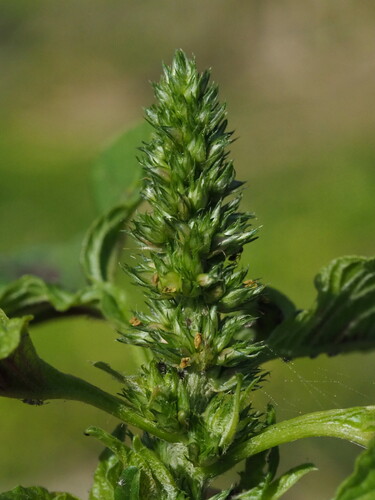
Amaranthus mangostanus
At a glance
- Lifecycle
- Annual
- Exposure
- Full sun
Cultivation
Prefers a well-drained fertile soil in a sunny position. Requires a hot sheltered position if it is to do well[K]. Plants should not be given inorganic fertilizers, see notes above on toxicity. Cultivated for its edible seed and leaves, there are many named varieties. It is an excellent hot weather substitute for spinach. There is some confusion over the correct name for this species, says that it is no more than a synonym for A. tricolor. Most if not all members of this genus photosynthesize by a more efficient method than most plants. Called the 'C4 carbon-fixation pathway', this process is particularly efficient at high temperatures, in bright sunlight and under dry conditions.
Propagation
Seed - sow late spring in situ. An earlier sowing can be made in a greenhouse and the plants put out after the last expected frosts. Germination is usually rapid and good if the soil is warm. Cuttings of growing plants root easily.
Edible uses
Leaves - cooked as a spinach or eaten raw. Seed - cooked. A cereal substitute. Very small but easy to harvest and very nutritious. The seed can be cooked whole, and becomes very gelatinous like this, but it is rather difficult to crush all of the small seeds in the mouth and thus some of the seed will pass right through the digestive system without being assimilated[K]. The crisp interior of large stems makes a tasty cooked vegetable.
Material uses
Yellow and green dyes can be obtained from the whole plant.
Habitat
Waste land and roadsides in the Himalayas.
Native range
E. Asia - India