Peppervine (Ampelopsis arborea)
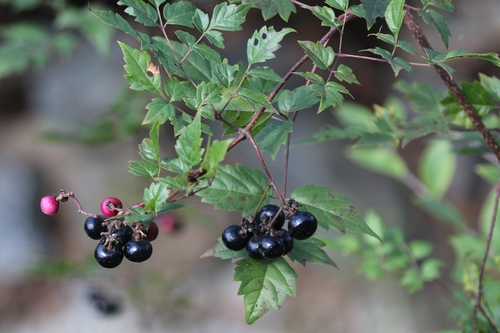
At a glance
- Exposure
- Full sun
- Frost limit
- −17.8 °C
Cultivation
Prefers a deep rich loam in a warm sheltered position in sun or semi-shade. A very ornamental plant. Plants climb by means of coiling tendrils but large plants often need tying in to support the weight of foliage. Any pruning is best carried out in the winter.
Propagation
Seed - sow in pots in a cold frame in the autumn or stratify for 6 weeks at 5°c and sow in the spring. Germination can be quite slow, sometimes taking more than a year. When large enough to handle, prick the seedlings out into individual pots and grow them on in the greenhouse for their first winter. When they are more than 20cm tall, they can be planted out into their permanent positions, preferably in late spring or early summer, after the last expected frosts. Cuttings of half-ripe wood, 7 - 10cm long, July/August in a frame. Cuttings or eyes in late autumn or winter. Either place them in the ground in a greenhouse or cold frame, or put them in pots. An eye cutting is where you have just one bud at the top and a short length of stem with a small part of the bark removed. These normally root well and grow away vigorously, being ready to plant into their permanent positions the following autumn. Layering into pots in late summer. Partially sever the stem in spring and then lift the new plants in the autumn.
Edible uses
Fruit - raw or cooked. A poor taste.
Habitat
Swampy woods.
Native range
Southern N. America - Florida to Texas and north to Illinois and Oklahoma.