Bristly Fiddleneck (Amsinckia tesselata)
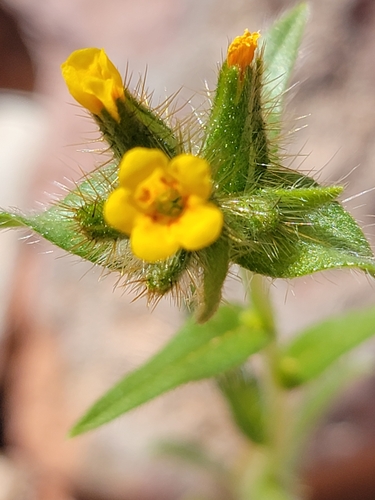
At a glance
- Lifecycle
- Annual
- Exposure
- Full sun
Cultivation
We have very little information on this species and do not know if it will be hardy in Britain, though judging by its native range it should succeed outdoors in many parts of the country. The following notes are based on the general needs of the genus. Succeeds in ordinary garden soil in full sun.
Propagation
Seed - sow late spring in situ.
Edible uses
Seed. If this species is like most other members of the family Boraginaceae, the seed is likely to ripen over a period of time and individual seeds fall from the plant when they are ripe. This will make harvesting any quantity of seed very fiddly and time consuming[K]. Leaves - raw.
Habitat
Roadsides and dry open slopes and flats, often in disturbed soil
Native range
South-western N. America - Utah.
Same genus
- Malheur Valley fiddleneck (Amsinckia carinata)
- Largeflowered fiddleneck (Amsinckia grandiflora)
- Bentflower fiddleneck (Amsinckia lunaris)
- Tarweed fiddleneck (Amsinckia lycopsoides)
- Menzies' fiddleneck (Amsinckia menziesii)
- Woolly breeches (Amsinckia spectabilis)
- Green fiddleneck (Amsinckia vernicosa)
- Hairy fiddleneck (Amsinckia calycina)