Rue-Anemone (Anemonella thalictroides)
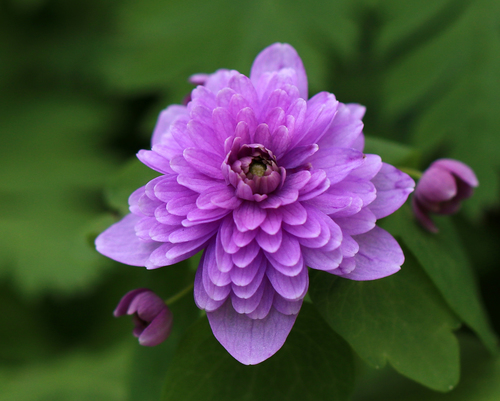
At a glance
- Lifecycle
- Perennial (hardy)
- Exposure
- Full shade
- Frost limit
- −34.4 °C
Cultivation
Requires a moist shady light soil. Plants dislike any root disturbance, they should be planted in their final positions whilst still young. A greedy plant inhibiting the growth of nearby plants, especially legumes. Plants are slow to establish, often falling victim to slug predations.
Propagation
Seed - best sown in a cold frame as soon as it is ripe in the summer. When large enough to handle, prick the seedlings out into individual pots and grow them on in the greenhouse for their first winter. Plant them out in the spring. Division - this is best done in the autumn by carefully removing pieces from the outside of the clump and growing them on in pots until they are established.
Edible uses
Root - cooked. Some caution is advised, see the notes above on toxicity.
Medicinal uses
A tea made from the roots is used in the treatment of diarrhoea and vomiting.
Habitat
Damp deciduous and mixed open woods.
Native range
Eastern N. America - New Hampshire to Massachusetts, south to Florida and west to Kansas.