Manchurian Spikenard (Aralia continentalis)
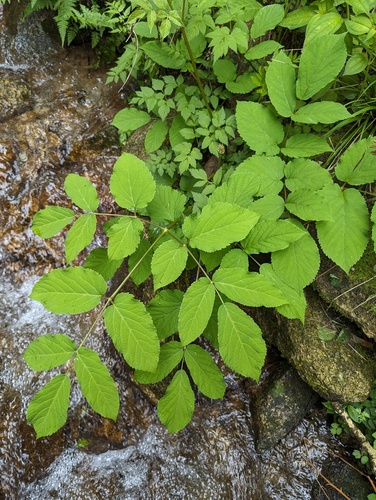
At a glance
- Lifecycle
- Perennial (hardy)
- Exposure
- Full shade
- Frost limit
- −12.2 °C
Cultivation
Prefers a deep moderately fertile moisture-retentive well-drained loam and a semi-shady position. This species is not hardy in the colder areas of the country, it tolerates temperatures down to between -5 and -10°c. The young growth in spring, even on mature plants, is frost-tender and so it is best to grow the plants in a position sheltered from the early morning sun[K]. This species is closely related to A. cordata.
Propagation
Seed - best sown as soon as ripe in a cold frame. Stored seed requires 3 - 5 months of cold stratification. Germination usually takes place within 1 - 4 months at 20°c. When large enough to handle, prick the seedlings out into individual pots and grow them on in light shade in a greenhouse for at least their first winter. Once the plants are 25cm or more tall, they can be planted out into their permanent positions, late spring or early summer being the best time to do this. Root cuttings 8cm long, December in a cold frame. Division of suckers in late winter. Very easy, the suckers can be planted out direct into their permanent positions if required.
Edible uses
The following uses are for the closely related A. cordata. It is quite possible that they also apply to this species[K]. Shoots - cooked or raw. Root - cooked.
Habitat
Not known
Native range
E. Asia - W. and N. China, Korea, Siberia.