Ma Dou Ling (Aristolochia debilis)
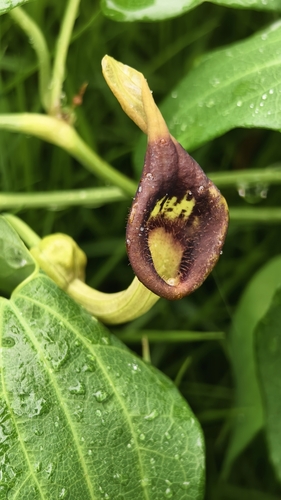
At a glance
- Lifecycle
- Perennial (hardy)
- Exposure
- Full sun
- Frost limit
- −12.2 °C
Cultivation
Prefers a well-drained loamy soil, rich in organic matter, in sun or semi-shade. This species is not very hardy in Britain, tolerating temperatures down to about -5°c. Most species in this genus have malodorous flowers that are pollinated by flies.
Propagation
Seed - best sown in a greenhouse as soon as it is ripe in the autumn. Pre-soak stored seed for 48 hours in hand-hot water and surface sow in a greenhouse. When large enough to handle, prick the seedlings out into individual pots and grow them on in the greenhouse for their first winter. Plant out in late spring or early summer after the last expected frosts. Division in autumn. Root cuttings in winter.
Edible uses
Leaves - cooked but caution is advised.
Medicinal uses
Alterative, antibacterial, antifungal, diuretic. The fruit and its capsule are antiasthmatic, antiseptic, antitussive and expectorant. The root is anodyne and anti-inflammatory. The whole plant is antitussive, carminative, stimulant and tonic. The root contains aristolochic acid. This has anti-cancer properties and can be used in conjunction with chemotherapy and radiotherapy.
Habitat
Roadside thickets and meadows in lowland, C. and S. Japan and in China.
Native range
E. Asia - China, Japan