Russian Tarragon (Artemisia dracunculoides)
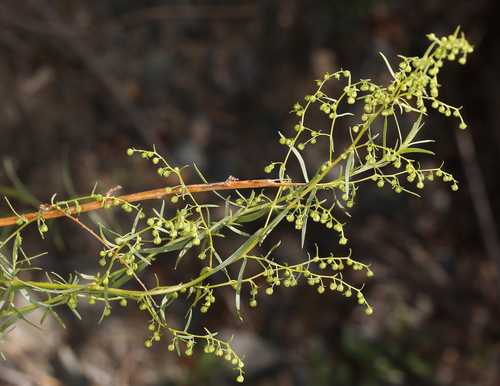
At a glance
- Lifecycle
- Perennial (hardy)
- Exposure
- Full sun
- Frost limit
- −40 °C
Cultivation
Easily grown in a well-drained circumneutral or slightly alkaline loamy soil, preferring a sunny position. Nomenclature is somewhat confused for this species. It is considered by some botanists to be a hardier form of A. dracunculus but with an inferior flavour. Members of this genus are rarely if ever troubled by browsing deer.
Propagation
Seed - surface sow from late winter to early summer in a greenhouse. When large enough to handle, prick the seedlings out into individual pots and plant them out in the summer. Division in spring or autumn. Very easy, the divisions can be planted out direct into their permanent positions f required. Basal cuttings in late spring. Harvest the shoots when 10 - 15cm long, pot them up in a greenhouse and plant out when well rooted. Very easy.
Edible uses
Leaves - raw or cooked. Seed - raw or cooked. An oily texture. The seed is very small and fiddly to use[K].
Medicinal uses
The herb is antiscorbutic, diuretic, emmenagogue, hypnotic and stomachic.
Material uses
Both the growing and the dried plant repels insects.
Habitat
Prairies, plains and dry slopes.
Native range
N. America. N. Europe. N. Asia - Siberia.