Red milkweed (Asclepias rubra)
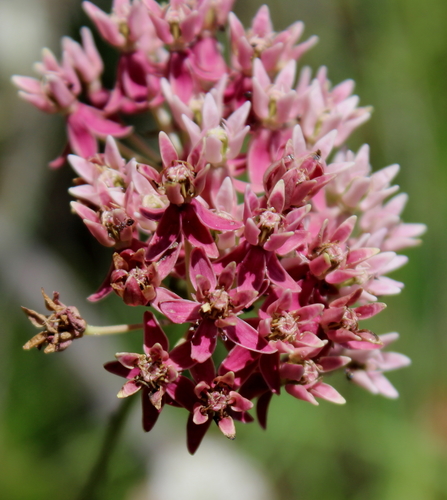
At a glance
- Lifecycle
- Perennial (hardy)
- Exposure
- Full sun
- Frost limit
- −28.9 °C
Cultivation
Prefers a well-drained light rich or peaty soil and a sunny position. A very ornamental plant. Many members of this genus seem to be particularly prone to damage by slugs. The young growth in spring is especially vulnerable, but older growth is also attacked and even well-established plants have been destroyed in wet years[K]. Plants resent root disturbance and are best planted into their final positions whilst small. The flower of many members of this genus can trap insects between its anther cells, the struggles of the insect in escaping ensure the pollination of the plant.
Propagation
Seed - best sown in a greenhouse as soon as it is ripe in the autumn or in late winter. As soon as the seedlings are large enough to handle, prick them out into individual pots and grow them on in the greenhouse for their first winter. Plant out when they are in active growth in late spring or early summer and give them some protection from slugs until they are growing away strongly. Division in spring. With great care since the plant resents root disturbance. Pot the divisions up and place them in a lightly shaded position in the greenhouse until they are growing away strongly, then plant them out in the summer, giving them some protection from slugs until they are established.. Basal cuttings in late spring. Use shoots about 10cm long with as much of their white underground stem as possible. Pot them up individually and place them in a lightly shaded position in a greenhouse until they are rooting and growing actively. If the plants grow sufficiently, they can be put into their permanent positions in the summer, otherwise keep them in the greenhouse until the following spring and when they are in active growth plant them out into their permanent positions. Give them some protection from slugs until they are established.
Edible uses
Flower buds - cooked as potherbs or added to soups. Young shoots and leaves - cooked as potherbs or added to soups. Young seed pods, 3 - 4 cm long, cooked. Flower clusters can be boiled down to make a sugary syrup. A chewing gum can be made from the latex contained in the stem and leaves, but it is possibly toxic.
Medicinal uses
The latex is used as a cure for warts.
Material uses
The following reports refer to other members of this genus and are possibly also appropriate for this species[K]. A good quality fibre is obtained from the bark, used in making twine, cloth, paper etc. The seed floss is used to stuff pillows etc or is mixed with other fibres to make cloth. Rubber can be made from latex contained in the leaves and the stems. Pods contain an oil and a wax which are of potential importance. The seed contains up to 20% of an edible semi-drying oil.
Habitat
Moist soils.
Native range
Eastern N. America - New Jersey and Pennsylvania to Florida, Missouri, Louisiana and Texas.