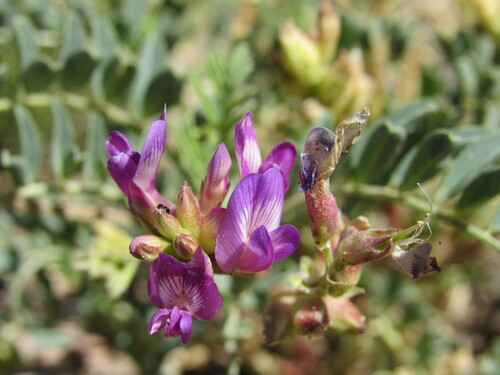
Specklepod Milkvetch (Astragalus diphysus)
At a glance
- Lifecycle
- Perennial (hardy)
- Exposure
- Full sun
Cultivation
We have very little information on this species and do not know if it will be hardy in Britain, though judging by its native range it could succeed outdoors in many parts of this country. The following notes are based on the general needs of the genus. Requires a dry well-drained soil in a sunny position. Plants are intolerant of root disturbance and are best planted in their final positions whilst still small. This species has a symbiotic relationship with certain soil bacteria, these bacteria form nodules on the roots and fix atmospheric nitrogen. Some of this nitrogen is utilized by the growing plant but some can also be used by other plants growing nearby.
Propagation
Seed - best sown as soon as it is ripe in a cold frame. As soon as it is large enough to handle, prick the seedlings out into individual pots and grow them on in the greenhouse for their first winter, planting them out into their permanent positions in late spring or early summer, after the last expected frosts.
Edible uses
Seed - cooked. Seedpods - raw, cooked or dried for later use. Roots - raw or cooked.
Habitat
Sandy plains, mesas and rocky slopes in canyons, sometimes on dunes or along sandy roadsides in yucca grassland or piñon or juniper forests, 1500 - 2200 metres.
Native range
South-western N. America.