Athyrium melanolepis
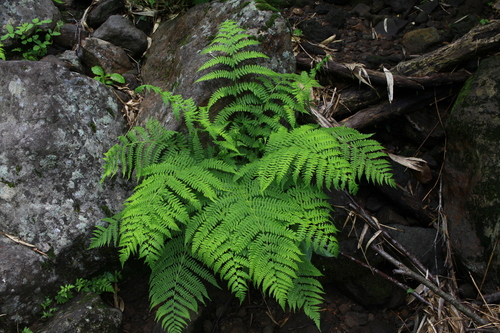
At a glance
- Exposure
- Full shade
Cultivation
We have very little information on this species and do not know if it will be hardy in Britain, though judging by its native range it should succeed outdoors in many parts of this country. It is closely related to A. felix-femina. The following notes are based on the general needs of the genus. An easily grown plant, it is calcifuge and prefers an acid soil with a pH from 4.5 to 6.5, but it tolerates alkaline soils if plenty of leaf mould is added. Members of this genus are rarely if ever troubled by browsing deer.
Propagation
Spores - surface sow in a pot of sterile compost in a shady part of the greenhouse and keep moist, this is most easily done by putting the pot in a plastic bag. Pot up small clumps of the plants when they are large enough to handle and keep them moist until they are established. Plant out in late spring of the following year. Division in spring as plants come into growth. Larger divisions can be planted straight into their permanent positions whilst smaller clumps are best potted up and kept in a cold frame until they are growing away well.
Edible uses
The very young fronds (croziers) are eaten. No more details are given, but some caution is advised. See the notes above on toxicity.
Habitat
Mountains, C. and N. Japan.
Native range
E. Asia - Japan, Korea and eastern Russia.