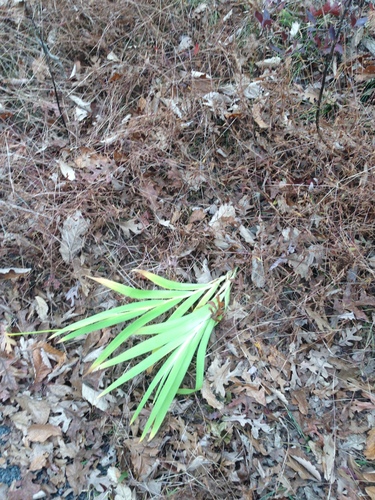
Blackberry lily (Belamcanda chinensis)
At a glance
- Lifecycle
- Perennial (hardy)
- Exposure
- Full sun
- Frost limit
- −12.2 °C
Cultivation
Requires a fairly rich sandy or loamy soil in a bright sunny position or light shade. Succeeds in most soils. A fairly hardy plant, tolerating temperatures down to about -15°c if given a deep dry mulch over the winter. A short lived plant, the bulbs are usually lifted in the autumn and stored in a cool but frost-free place over the winter, replanting them in the spring. Individual flowers only live for one day, but the plant produces a succession of blooms over a period of several weeks. Slugs really love this plant and can destroy even quite large clumps as they come into growth in the spring[K].
Propagation
Seed - best sown as soon as it is ripe in a cold frame. Pre-chill stored seed for 7 days and sow spring in a cold frame. The seed germinates in 2 - 8 weeks at 20°c. Division in spring or early autumn. Larger divisions can be planted straight into their permanent positions whilst smaller clumps are best potted up and kept in a cold frame until they are growing away well.
Edible uses
Leaves - cooked. Caution is advised, see the notes above on toxicity.
Medicinal uses
The leopard lily has a very long history of use in traditional Chinese medicine. It is a bitter cooling herb that acts mainly on the lungs and the liver, lowering fevers and reducing inflammation. The root contains several medically active constituents including flavonoids and isoflavonoids.
Material uses
The root contains tannin.
Habitat
Shrubberies and banks at the edge of cultivation in rich damp soils in the Himalayas.
Native range
E. Asia - China, Japan, Himalayas.
Scientific synonyms Iris domestica