Boehmeria spicata
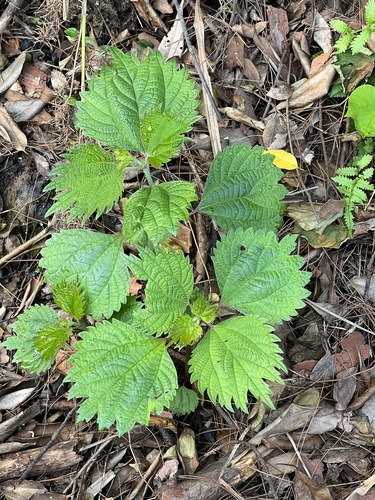
At a glance
- Lifecycle
- Perennial (hardy)
- Exposure
- Full sun
Cultivation
We have very little information on this species and do not know if it will be hardy in Britain, though judging by its native range it should succeed outdoors at least in the milder parts of the country. A plant growing in a sunny position in well-drained soil at Kew, planted in 1982, is thriving and was 1 metre tall in mid summer 1999[K]. A sub-shrub, it usually dies back each year to a woody base. The following notes are based on the general needs of the genus. Succeeds in a warm sandy soil. We are not sure if this species is dioecious or monoecious[K].
Propagation
Seed - sow spring in a warm greenhouse and only just cover the seed. When they are large enough to handle, prick the seedlings out into individual pots and grow them on in the greenhouse for at least their first winter. Plant them out into their permanent positions in late spring or early summer, after the last expected frosts. Division in spring. Very easy, larger divisions can be planted straight into their permanent positions whilst smaller clumps are best potted up and kept in a cold frame until they are growing away well. Layering. Basal cuttings in late spring. Harvest the shoots when they are about 10 - 15cm long with plenty of underground stem. Pot them up into individual pots and keep them in light shade in a cold frame or greenhouse until they are rooting well. Grow them on for their first winter in the cold frame and then plant them out in the summer.
Edible uses
Young leaves - cooked.
Material uses
The fibre obtained from the stems is used to make ropes, cloth and paper.
Habitat
Common in mountains, C. and S. Japan.
Native range
E. Asia - China, Japan, Korea.