Lesser calamint (Calamintha nepeta)
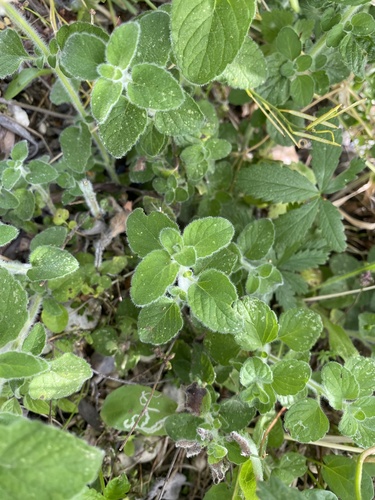
At a glance
- Lifecycle
- Perennial (hardy)
- Exposure
- Full sun
- Frost limit
- −23.3 °C
Cultivation
Prefers a well-drained dry to moist neutral to alkaline soil and a warm sunny position. Plants are hardy to about -15°c. This species is very closely related to C. sylvatica, and is considered to be no more than a sub-species by some botanists. A very good bee plant.
Propagation
Seed - sow spring in a greenhouse and only just cover the seed. It usually germinates in 2 weeks at 21°c. Prick out the seedlings when they are large enough to handle and, if they grow sufficiently, plant them out into their permanent positions in the summer otherwise wait until the following spring. Division in spring. Very easy, larger clumps can be planted direct into their permanent positions. It is best to pot up smaller clumps and grow them on in a cold frame until they are well rooted before planting them out in the summer. Basal cuttings in May or June. They should be rooted in a sandy compost. Harvest the shoots when they are about 10 - 15cm long with plenty of underground stem. Pot them up into individual pots and keep them in light shade in a cold frame or greenhouse until they are rooting well. Plant them out in the summer.
Edible uses
The leaves have a strong pennyroyal-like fragrance and are more pungent than calamint (C. sylvatica). A sweet and aromatic herb tea is made from the leaves.
Medicinal uses
Lesser calamint was commonly used as a medicinal herb in medieval times, though is little used by modern herbalists.
Habitat
Dry banks, usually on calcareous soils.
Native range
Europe, including Britain, south from France and S. Russia to N. Africa and to Iran in W. Asia.
Scientific synonyms Clinopodium nepeta