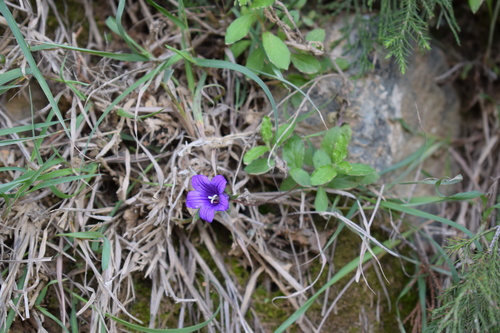
Campanula edulis
At a glance
- Lifecycle
- Perennial (hardy)
- Exposure
- Full sun
Cultivation
We have very little information on this species and do not know if it will be hardy in Britain. There is some doubt as to the validity of this name, the plant is closely related to C. dulcis and to the annual C. strigosa. The following notes are based on the general needs of the genus. Succeeds in most well-drained fertile soils. The species in this genus do not often hybridize and so seed can generally be relied upon to come true. Members of this genus are rarely if ever troubled by browsing deer.
Propagation
Seed - surface sow spring in a cold frame. The seed usually germinates in 2 - 4 weeks at 18°c. When they are large enough to handle, prick the seedlings out into individual pots and grow them on in a cold frame for at least their first winter. Plant them out into their permanent positions in late spring or early summer, after the last expected frosts. Basal cuttings in spring. Harvest the shoots when they are about 10 - 15cm long with plenty of underground stem. Pot them up into individual pots and keep them in light shade in a cold frame or greenhouse until they are rooting well. Plant them out in the summer. Division in spring or autumn. Very easy, larger clumps can be replanted direct into their permanent positions, though it is best to pot up smaller clumps and grow them on in a cold frame until they are rooting well. Plant them out in the summer or following spring.
Edible uses
Root - thick and sapid.
Habitat
Cracks in rocks in mountainous areas.
Native range
N. Africa - Arabia.
Same genus
- Rampion bellflower (Campanula rapunculus)
- Eastwood's bellflower (Campanula angustiflora)
- Marsh bellflower (Campanula aparinoides)
- Yukon Bellflower (Campanula aurita)
- European bellflower (Campanula bononiensis)
- Carnic bellflower (Campanula carnica)
- Tussock bellflower (Campanula carpatica)
- Earleaf bellflower (Campanula cochlearifolia)