Bush Chinkapin (Castanea alnifolia)
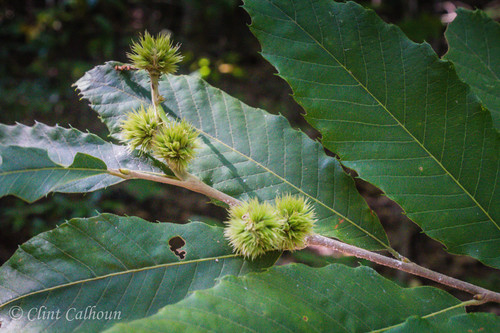
At a glance
- Lifecycle
- Perennial (hardy)
- Exposure
- Full sun
- Frost limit
- −17.8 °C
Cultivation
Prefers a good well-drained slightly acid loam but succeeds in dry soils. This species only really thrives in areas with hot summers. Usually a small shrub This species is similar to and often confused with C. pumila. An excellent soil-enriching understorey shrub in pine forests. Flowers are produced on wood of the current year's growth. Plants in this genus are notably resistant to honey fungus.
Propagation
Seed - where possible sow the seed as soon as it is ripe in a cold frame or in a seed bed outdoors. The seed must be protected from mice and squirrels. The seed has a short viability and must not be allowed to become dry. It can be stored in a cool place, such as the salad compartment of a fridge, for a few months if it is kept moist, but check regularly for signs of germination. The seed should germinate in late winter or early spring. If sown in an outdoor seedbed, the plants can be left in situ for 1 - 2 years before planting them out in their permanent positions. If grown in pots, the plants can be put out into their permanent positions in the summer or autumn, making sure to give them some protection from the cold in their first winter[K]. Division of suckers in winter. They can be planted straight out into their permanent positions.
Edible uses
Seed - raw or cooked.
Material uses
The bark, leaves, wood and seed husks all contain tannin.
Habitat
Dry sandy soils.
Native range
South-eastern N. America - N. Carolina to Arkansas.