Papoose Root (Caulophyllum robustum)
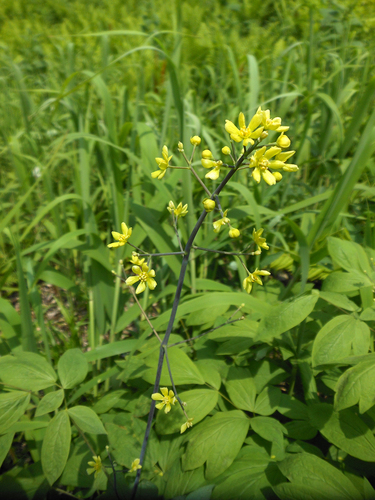
At a glance
- Lifecycle
- Perennial (hardy)
- Exposure
- Full shade
- Frost limit
- −17.8 °C
Cultivation
We have very little information on this species and do not know if it will be hardy in Britain, though judging by its native range it should succeed outdoors in most parts of this country. The following notes are based on the general needs of the genus. Easily grown in a damp light humus-rich woodland soil preferring a position in deep shade. One report says that it is best in a peat garden. The seeds rupture the ovary before they are fully ripe and continue to expand naked, they are bright blue when fully ripe.
Propagation
Seed - best sown as soon as it is ripe in a shady part of a cold frame. If stored seed is used, it should be sown as soon as it is received. Germination can be erratic. Prick out the seedlings as soon as they are large enough to handle and grow them on in a shady part of a greenhouse or cold frame for at least their first winter. Plant them out into their permanent positions during autumn or early winter. Division in spring or just after flowering.
Edible uses
Young leaves - cooked.
Medicinal uses
This herb is said to have similar medicinal properties to C. thalictroides. These are:- Papoose root is a traditional herb of the North American Indians and was used extensively by them to facilitate child birth. The root is anthelmintic, antispasmodic, diaphoretic, diuretic, emmenagogue, oxytocic and sedative. The roots are normally harvested in the autumn, because they are at their richest at this time, and are dried for later use. The root is harvested in early spring as new growth is beginning and is used to make a homeopathic remedy.
Habitat
Woods in mountains all over Japan.
Native range
E. Asia - Japan, Korea.