Celtis glycycarpa
At a glance
- Lifecycle
- Perennial (hardy)
- Exposure
- Full sun
Cultivation
We have very little information on this species and do not know if it will be hardy in Britain. The following notes are based on the general needs of the genus. Succeeds in any reasonably good soil, preferring a good fertile well-drained loamy soil. Trees prefer hotter summers and more sunlight than are normally experienced in Britain, they often do not fully ripen their wood when growing in this country and they are then very subject to die-back in winter. Trees can be very long-lived, perhaps to 1000 years. Plants in this genus are notably resistant to honey fungus.
Propagation
Seed - best sown as soon as it is ripe in a cold frame. As soon as they are large enough to handle, prick the seedlings out into individual pots. The leaves of seedlings often have a lot of white patches without chlorophyll, this is normal and older plants produce normal green leaves. Grow the seedlings on in a cold frame for their first winter, and plant them out in the following late spring or early summer[K]. Give them some protection from the cold for their first winter outdoors. Cuttings
Edible uses
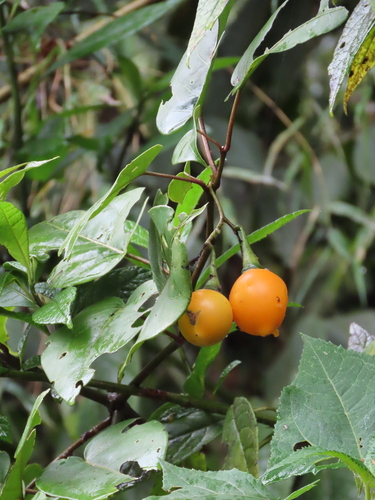
Fruit. No more details are given, but there is likely to be very little flesh around the seed, and this flesh is likely to be dry and mealy[K].
Habitat
Not known
Native range
S. America - Argentina, Brazil.