Mexican tea (Chenopodium ambrosioides)
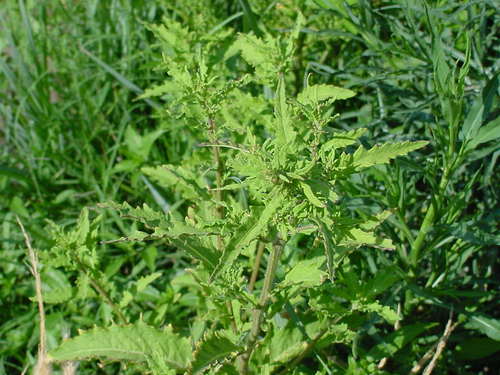
At a glance
- Lifecycle
- Annual
- Exposure
- Full sun
Cultivation
An easily grown plant, succeeding in most soils but disliking shade. Tolerates a pH in the range 5.2 to 8.3. Plants are annuals or short-lived perennials. This species is sometimes grown as a medicinal and culinary plant, especially in its native Mexico. The sub-species C. ambrosioides anthelminticum is more active medicinally and is the form most often cultivated for its vermicidal activity. The bruised leaves emit an unpleasant foetid odour.
Propagation
Seed - whilst it can be sown in situ in mid to late spring, we have had better results by sowing the seed in a cold frame in early spring. Put a few seeds in each pot and thin to the best plant if necessary. Germination rates are usually very good and the seedlings should appear within a few days of sowing the seed. Plant out in late spring, after the last expected frosts.
Edible uses
Leaves - cooked. The raw leaves should only be eaten in small quantities, see the notes above on toxicity. Seed - cooked. The seed is small and fiddly, it should be soaked in water overnight and thoroughly rinsed before it is used in order to remove any saponins. An infusion of the leaves is a tea substitute.
Medicinal uses
Mexican tea is a Central American herb that has been used for centuries to expel parasitic worms from the body. The whole plant is analgesic, antiasthmatic, carminative, stomachic and vermifuge. See also the notes above on toxicity. Until fairly recently, this was one of the most commonly used vermifuges, though it has now been largely replaced by synthetic drugs. The leaves are added in small quantities as a flavouring for various cooked bean dishes because their carminative activity can reduce flatulence.
Material uses
The plant is used as a fumigant against mosquitoes and is also added to fertilizers to inhibit insect larvae. Gold/green dyes can be obtained from the whole plant.
Habitat
Mainly found on dry wasteland and cultivated ground.
Native range
Tropical America. Naturalized in S. Europe.
Scientific synonyms Dysphania ambrosioides