Sticky goosefoot (Chenopodium botrys)
Other names Jerusalem oak goosefoot
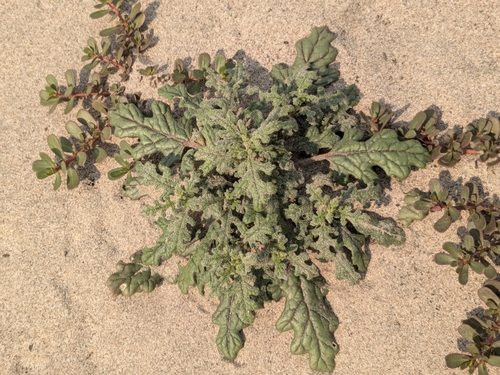
At a glance
- Lifecycle
- Annual
- Exposure
- Full sun
Cultivation
An easily grown plant, succeeding in most soils but disliking shade. The Jerusalem oak is occasionally cultivated for its edible leaves, there is at least one named variety, developed in the Netherlands. 'Green Magic' is a cultivar with a delicious nutty flavour. The dried flower spikes are aromatic and ornamental.
Propagation
Seed - sow spring in situ. Most of the seed usually germinates within a few days of sowing.
Edible uses
Leaves - cooked (the report does not say where!). The raw leaves should only be eaten in small quantities, see the notes above on toxicity. Seed - cooked. It can be ground into a meal and used with flour in making bread etc. The seed is small and fiddly, it should be soaked in water overnight and thoroughly rinsed before it is used in order to remove any saponins. The leaves are a tea substitute.
Medicinal uses
The plant is antiasthmatic. It is also used in the treatment of catarrh. The plant has been used as an anthelmintic as a substitute for C. ambrosioides.
Material uses
Gold/green dyes can be obtained from the whole plant. The dried plant is a moth repellent. The aromatic and ornamental flower spikes are used. The whole plant is very aromatic and is used as a scent in pillows, bags, baskets etc.
Habitat
Waste places, roadsides and disturbed soil in eastern N. America.
Native range
S. Europe to C. Asia.
Scientific synonyms Dysphania botrys