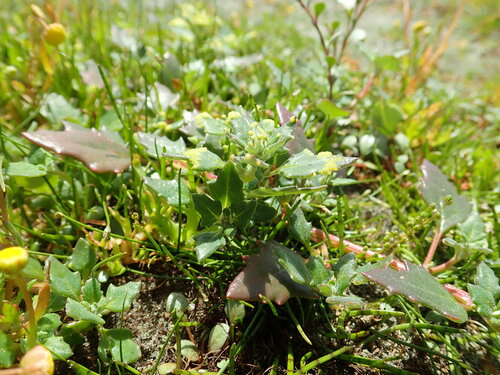
Oakleaf goosefoot (Chenopodium glaucum)
Other names oak-leaved goosefoot, Oak-leaf goosefoot, glaucous goosefoot
At a glance
- Lifecycle
- Annual
- Exposure
- Full sun
Cultivation
An easily grown plant, succeeding in most soils but disliking shade.
Propagation
Seed - sow spring in situ. Most of the seed usually germinates within a few days of sowing.
Edible uses
Young leaves and shoot tips - cooked and used like spinach. The raw leaves should only be eaten in small quantities, see the notes above on toxicity. Seed - cooked. Ground into a powder and used with wheat or other cereals in making bread etc. The seed is small and fiddly, it should be soaked in water overnight and thoroughly rinsed before it is used in order to remove any saponins.
Material uses
Gold/green dyes can be obtained from the whole plant.
Habitat
Rich waste ground, rarely by the sea-shore, in Britain.
Native range
Europe to Asia. Native of Britain?
Scientific synonyms Oxybasis glauca