Desertwillow (Chilopsis linearis)
Other names Desert-Willow, desert willow, Art's Seedless Desert Willow
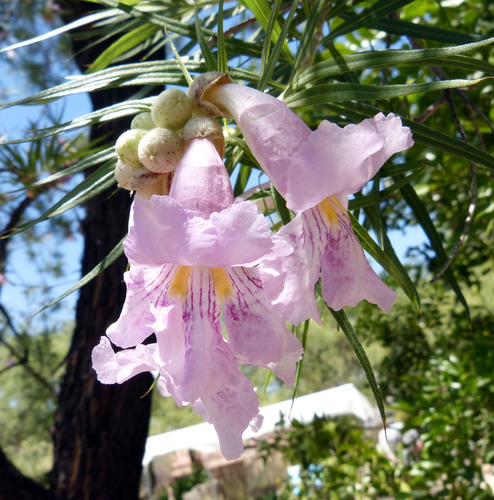
At a glance
- Lifecycle
- Perennial (hardy)
- Exposure
- Full sun
- Frost limit
- −12.2 °C
Cultivation
Requires a very warm sunny position in a very well-drained soil. Plants are likely to be intolerant of wet conditions especially in the winter[K]. This species is not very hardy outdoors in Britain, tolerating temperatures down to about -3°c. The showy flowers are fragrant.
Propagation
Seed - we have very little information on this species but would suggest sowing the seed in a greenhouse in the spring. When they are large enough to handle, prick the seedlings out into individual pots and grow them on in a greenhouse for at least their first winter. Plant them out into their permanent positions in late spring or early summer, after the last expected frosts. It will probably pay to protect the plants for their first winter or two in the open ground. There are about 75,000 seeds per pound, only half of which are viable. About 4,000 plants are usually raised from a pound of seed. Grows readily from cuttings.
Edible uses
The blossoms and seedpods have been used for food.
Medicinal uses
A decoction of the flowers is used for coughs and bronchial disturbances.
Material uses
The young pliable twigs are woven into baskets. The bark has been used to make shirts and nets. Wood - coarse-grained, soft, weak, rather durable in the soil. Used for fence posts and fuel.
Habitat
Gravelly or rocky soils in arid desert washes and desert grasslands, 400 - 1600 metres.
Native range
South-western N. America - California to Texas south to Mexico.