Calamondin Orange (Citrofortunella microcarpa)
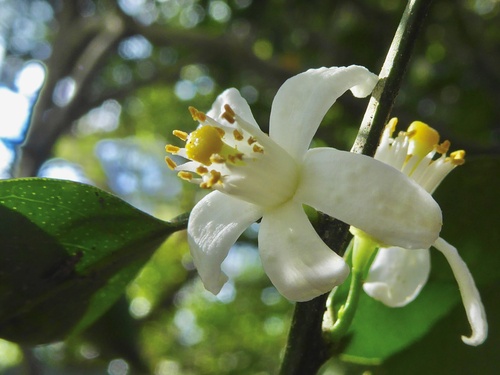
At a glance
- Lifecycle
- Perennial (hardy)
- Exposure
- Full sun
- Frost limit
- −6.7 °C
Cultivation
Requires a position in full sun in a fertile well-drained but not dry soil. Plants are not very hardy in Britain but they do tolerate a few degrees of frost. Plants are susceptible to lime-induced and magnesium-deficiency chlorosis. A popular house plant.
Propagation
The following notes are based on Citrus species. They are probably applicable here as well, even though this is a bi-generic hybrid, since any seed might be produced polyembrionically. The seed is best sown in a greenhouse as soon as it ripe after thoroughly rinsing it. When large enough to handle, prick the seedlings out into individual pots and grow them on in the greenhouse for at least three growing seasons before trying them outdoors. Plant them out in the summer and give them some protection from the cold for their first few winters outdoors. Cuttings of half-ripe wood, July/August in a frame. Layering in October.
Edible uses
Fruit - raw or cooked. Very acid, they are usually pickled, preserved or used in drinks, teas, marmalades, chutneys etc. The preserved peel is used as a flavouring in other foods.
Habitat
Not known in the wild.
Native range
A bi-generic hybrid, Citrus reticulata x Fortunella margarita?.