Lemon (Citrus x meyeri)
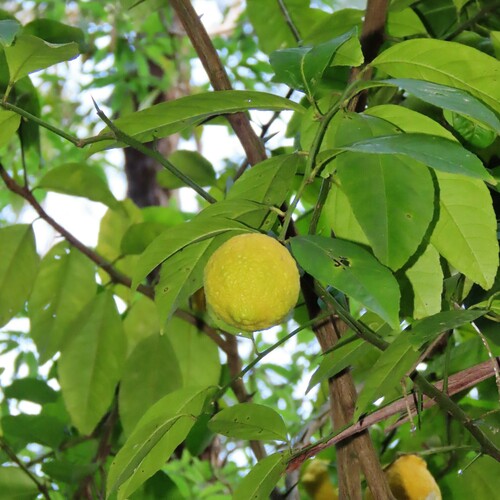
At a glance
- Lifecycle
- Perennial (hardy)
- Exposure
- Full sun
- Frost limit
- −6.7 °C
Cultivation
Prefers a moderately heavy loam with a generous amount of compost and sand added and a very sunny position. This is the hardiest lemon. A small to medium spreading tree, it is nearly thornless, hardy and productive. By budding onto hardier species such as C. aurantium, C. ichangensis or Poncirus trifoliata, the lemon becomes more cold tolerant and its climatic range can be somewhat extended. The flowers are sweetly scented. Plants dislike root disturbance and so should be placed into their permanent positions when young. If growing them in pots, great care must be exercised when potting them on into larger containers.
Propagation
The seed is best sown in a greenhouse as soon as it ripe after thoroughly rinsing it. When large enough to handle, prick the seedlings out into individual pots and grow them on in the greenhouse for at least three growing seasons before trying them outdoors. Plant them out in the summer and give them some protection from the cold for their first few winters outdoors. Cuttings of half-ripe wood, July/August in a frame. This species grows easily from cuttings. Layering in October.
Edible uses
Fruit - raw or cooked. The dried rind of the fruit is often used as a flavouring in cakes etc. The dried leaves are sometimes mixed with tea leaves for use as a flavouring. An essential oil from the rind is used as a food flavouring. The flowers are eaten in ice creams, fritters, jams etc.
Medicinal uses
Lemons are an excellent preventative medicine and have a wide range of uses in the domestic medicine chest. The fruit is rich in vitamin C which helps the body to fight off infections and also to prevent or treat scurvy. Although the fruit is very acid, once eaten it has an alkalizing effect upon the body. The skin of the ripe fruit is carminative and stomachic. The essential oil from the skin of the fruit is strongly rubefacient and when taken internally in small doses has stimulating and carminative properties. The stem bark is bitter, stomachic and tonic. An essential oil from the fruit rind is used in aromatherapy. Its keyword is 'Refreshing'. Citrus species contain a wide range of active ingredients and research is still underway in finding uses for them. They are rich in vitamin C, bioflavonoids, acids and volatile oils. They also contain coumarins such as bergapten which sensitizes the skin to sunlight. Bergapten is sometimes added to tanning preparations since it promotes pigmentation in the skin, though it can cause dermatitis or allergic responses in some people. The bioflavonoids in the fruit help to strengthen the inner lining of blood vessels, especially veins and capillaries, and help counter varicose veins and easy bruising.
Material uses
A semi-drying oil obtained from the seed is used in soap making. An essential oil from the peel is used as a food flavouring and also in perfumery and medicines. An essential oil obtained from the leaves and young twigs is called 'petitgrain oil'. Yields are around 0.4%. The dried fruit rind has been used as an insect repellent in the clothes cupboard. The juice of the fruit is used for polishing bronze and other metals that have been neglected. Wood - nicely veined, it takes a beautiful polish.
Habitat
Not known in the wild.
Native range
Original habitat is obscure, the plant is probably a hybrid involving C. limon x C. sinensis.