Commelina coelestis
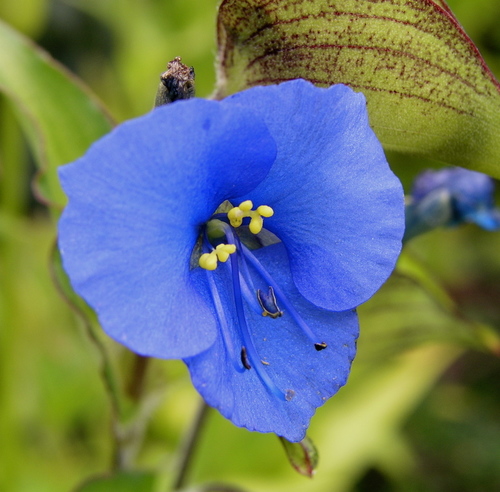
At a glance
- Lifecycle
- Perennial (hardy)
- Exposure
- Full sun
- Frost limit
- −6.7 °C
Cultivation
Prefers a light well-drained loam with added leafmold and a warm sunny position. A very ornamental plant. When grown in a light well-drained soil and mulched well, the roots usually survive the winter outdoors, at least in the milder areas of the country[111, K]. This plant is very attractive to slugs[K].
Propagation
Seed - sow March in a greenhouse. The seed usually germinates in 4 - 5 weeks at 20°c. Prick the seedlings out into individual pots as soon as they are large enough to handle and plant out in late spring or early summer after the last expected frosts. Division in early spring. The root clump consists of a number of finger-shaped roots joined together at their tops. When dividing this, it is important to ensure that each division has at least one growing bud at the top[111, K]. Pot up the divisions and grow them on in a greenhouse or cold frame until they are established and then plant them out in late spring, after the last expected frosts[K]. Cuttings during the growing season. These root very easily.
Edible uses
Tubers - cooked. The plant forms a clump of thin finger-shaped roots about 7 - 10cm long. These are easily harvested, though overall yields are low. The roots have a fairly bland flavour and an acceptable texture[K]. By no means a favourite root crop, but acceptable in small quantities[K].
Habitat
Not known
Native range
Southern N. America - Mexico.