Lily Of The Valley (Convallaria keiskei)
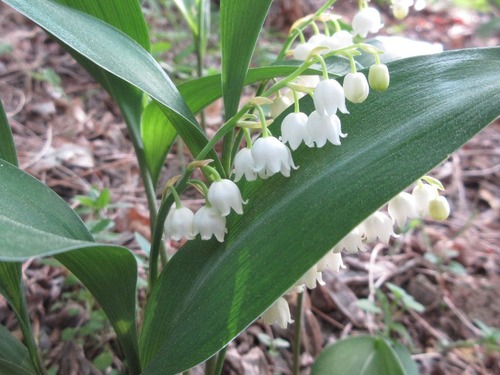
At a glance
- Lifecycle
- Perennial (hardy)
- Exposure
- Full sun
- Frost limit
- −40 °C
Cultivation
Succeeds in almost any situation, including the dense dry shade of large trees. Grows well in heavy clay soils. Plants are hardy to -20°c or lower. A good bee plant. A very ornamental plant, though it can become very invasive once it is established. Plants seem to be immune to the predations of rabbits.
Propagation
Seed - best sown as soon as it is ripe, otherwise in late winter, in a cold frame. Sow the seed thinly so that the seedlings can be allowed to grow on undisturbed in the pot for their first year. Apply a liquid feed during the growing season to ensure that the seedlings are well fed. Divide the young plants into individual pots when they die down in late summer and grow them on in pots in a shady position in a cold frame for at least another year before planting them out into their permanent positions when they are dormant[K]. Division in September. Very easy, larger clumps can be replanted direct into their permanent positions, though it is best to pot up smaller clumps and grow them on in a cold frame until they are rooting well. Plant them out in the spring.
Edible uses
The whole plant is cooked as a potherb or put in miso soup. Caution is advised, see the notes above on toxicity. The flowers and flower buds are preserved in salt or mixed with leaf tea and drunk.
Material uses
Plants can be grown as a ground cover in woodland shade or in a shrubbery.
Habitat
Highlands and mountain meadows all over Japan.
Native range
E. Asia - China, Japan, Korea, Siberia.