Cornus chinensis
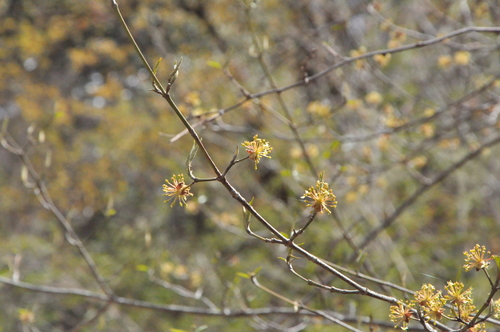
At a glance
- Lifecycle
- Perennial (hardy)
- Exposure
- Full sun
- Frost limit
- −12.2 °C
Cultivation
An easily grown plant, it succeeds in any soil of good or moderate fertility. Plants are not very cold-tolerant, they succeed outdoors only in the milder areas of the country where winter temperatures do not fall below about -5°c. A specimen growing in a fairly open sunny position at Kew Gardens in April 1999 was about 10 years old and 2 metres tall. It had no sign of flowers, though it is obviously more cold hardy than believed since it has already tolerated temperatures rather lower than -5°c[K]. This species is very closely related to C. mas and C. officinalis, differing mainly in having black instead of red fruit. Plants in this genus are notably resistant to honey fungus.
Propagation
Seed - best sown as soon as it is ripe in a cold frame or in an outdoors seedbed if there is sufficient seed. Prick out the seedlings of cold-frame sown seeds into individual pots as soon as they are large enough to handle and grow the plants on for their first winter in a greenhouse, planting out in the spring after the last expected frosts. Cuttings of half-ripe side shoots, July/August in a frame. Cuttings of mature wood of the current year's growth, taken with a heel if possible, autumn in a cold frame. High percentage. Layering of new growth in June/July. Takes 9 months.
Edible uses
The following notes refer to the closely related species C. officinalis, they probably also apply to this species[K]:- Fruit - raw or cooked.
Medicinal uses
The fruit is used medicinally for similar treatments as Cornus officinalis. These are:- Shan Zhu Yu has been used for at least 2,000 years in Chinese herbal medicine. It is a herb that "stabilizes and binds" and is used principally to reduce heavy menstrual bleeding and unusually active secretions including copious sweating, excessive urine, spermatorrhoea and premature ejaculation. The fruit is antibacterial, antifungal, hypotensive, antitumor, astringent, diuretic, hepatic and tonic. The stem bark is astringent, antimalarial and tonic. The plant is antibacterial, diuretic, hypotensive and a urinary antiseptic.
Habitat
Slopes, margins of mixed forests and dense forests at elevations of 700 - 2500, occasionally to 3500 metres.
Native range
E. Asia - C. and S. China.