Corydalis juncea
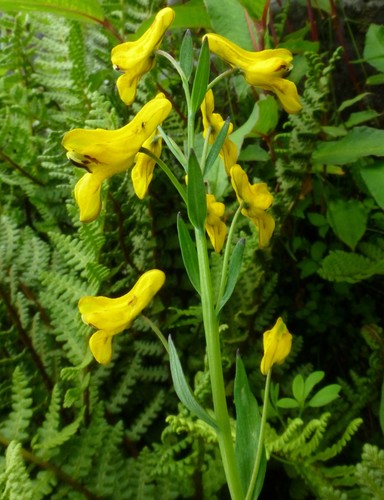
At a glance
- Lifecycle
- Perennial (hardy)
- Exposure
- Full sun
Cultivation
We have very little information on this species and do not know if it will be hardy in Britain, though judging by its native range it should succeed outdoors in many parts of this country. This species belongs to the section 'Fasciculatae' of the genus. The roots of many, if not all the species in that section, are eaten in the Himalayas. The following notes are based on the general needs of the genus. Prefers a moist, well-drained rather light soil, thriving in semi-shade. Grows well in a woodland garden or peat bed. Plants seem to be immune to the predations of rabbits.
Propagation
Seed - best sown as soon as it is ripe, the seed rapidly loses viability if it is allowed to become dry. Divide the seedlings into individual pots once they have become dormant and grow them on in a partially shaded area of a greenhouse for at least another year. Plant them out into their permanent positions when they are dormant. Division after flowering.
Edible uses
Root. No more details are given.
Habitat
Alpine shrubberies, open slopes, 2500 - 4300 metres.
Native range
E. Asia - Himalayas from C. Nepal to S.E. Tibet.