Oriental Sea-kale (Crambe orientalis)
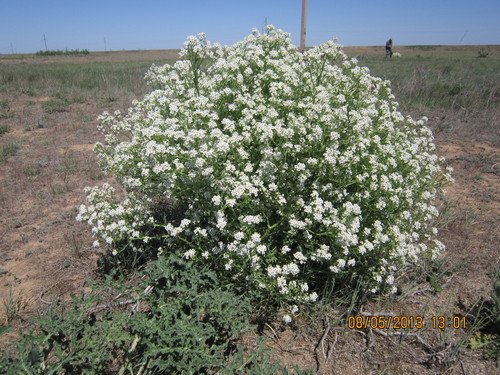
At a glance
- Lifecycle
- Perennial (hardy)
- Exposure
- Full sun
- Frost limit
- −17.8 °C
Cultivation
An easily grown species, succeeding in a good loam and an open sunny position. Plants are hardy to about -20°c. A deep-rooted plant.
Propagation
Seed - sow March/April in a seedbed outdoors and either thin the plants out or move them to their permanent positions when about 10cm tall. The young plants are very attractive to slugs so some protection will often be needed. Germination can be slow so it is best to sow the seed in pots in a cold frame. Prick out the seedlings into individual pots as soon as they are large enough to handle and plant out into their permanent positions when they are at least 10cm tall. Division in spring or autumn. Dig up the root clump and cut off as many sections as you require, making sure they all have at least one growing point. The larger of these divisions can be planted out straight into their permanent positions, though small ones are best potted up and grown on in a cold frame until they are established. Root cuttings, 3 - 10 cm long, in spring. These can be planted straight into the open ground or you can pot them up in the greenhouse and plant them out once they are growing strongly.
Edible uses
Leaves - cooked. Immature flowering stems - raw or cooked and used like broccoli. Root - cooked. It is very thick and can be used as a horseradish substitute.
Habitat
Fields, hills, dry slopes, rocky places and clay soils.
Native range
Europe - E. Mediterranean to W. Asia - Iran.