Mountain springparsley (Cymopterus montanus)
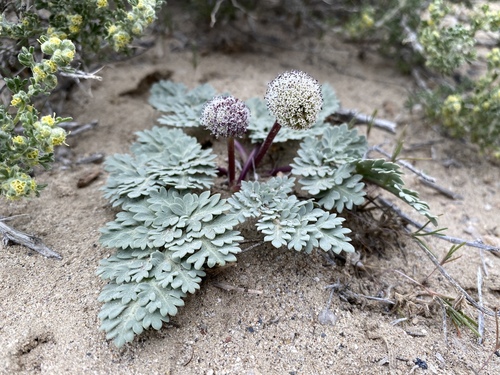
At a glance
- Lifecycle
- Perennial (hardy)
- Exposure
- Full sun
Cultivation
We have almost no information on the needs of this species and do not know if it is hardy in Britain. We suggest growing it in a sunny position in a well-drained light or medium soil[K].
Propagation
Seed - we have no information on this species but suggest sowing the seed in a cold frame as soon as it is ripe if this is possible. Sow stored seed as early in the year as possible in a greenhouse. As soon as they are large enough to handle, prick the seedlings out into individual pots and grow them on in the greenhouse for at least their first winter. Plant them out into their permanent positions in late spring or early summer, after the last expected frosts. Division in spring or autumn might be possible.
Edible uses
Root - raw or cooked. Seed - raw or cooked.
Habitat
Dry soils. Dry hills and valleys at elevations of 1200 - 2100 metres.
Native range
Central N. America - South Dakota to Nebraska, Wyoming, Colorado and Texas.
Same genus
- Featherleaf springparsley (Cymopterus beckii)
- Twoleaf springparsley (Cymopterus coulteri)
- Davis' springparsley (Cymopterus davisii)
- Desert springparsley (Cymopterus deserticola)
- Douglass' springparsley (Cymopterus douglassii)
- Evert's springparsley (Cymopterus evertii)
- Gilman's springparsley (Cymopterus gilmanii)
- Globe springparsley (Cymopterus globosus)