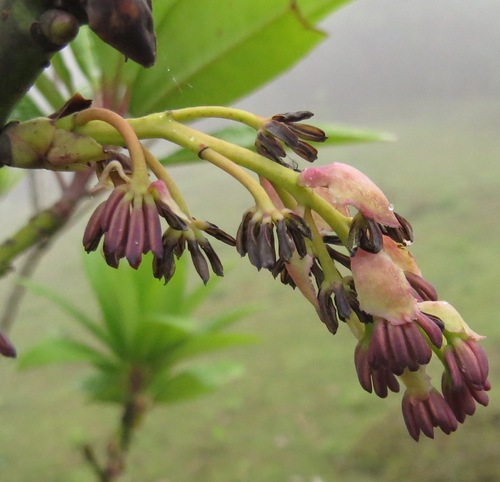
Daphniphyllum himalense
At a glance
- Lifecycle
- Perennial (hardy)
- Exposure
- Full shade
- Frost limit
- −12.2 °C
Cultivation
Succeeds in any good soil, tolerating lime but perhaps not suitable for very chalky soils. D. macropodum. Miq. is hardy at Kew and tolerates temperatures down to about -20°c. The flowers have a pungent aroma. Dioecious, male and female plants must be grown if seed is required.
Propagation
Seed - sow spring in a cold frame. When they are large enough to handle, prick the seedlings out into individual pots and grow them on in the greenhouse for at least their first winter. Plant them out into their permanent positions in late spring or early summer, after the last expected frosts. Cuttings of moderately ripened wood, 7 - 10cm with a heel or at a junction with old wood, July in individual pots in a frame. The cuttings are slow to root, give them brisk bottom heat. Layering of current seasons growth, 12cm long in August/September. Takes 12 - 18 months. High percentage.
Edible uses
The very closely related D. macropodum is said to have edible leaves. Are the leaves of this species also edible cooked?[K]
Medicinal uses
A paste of the wod is applied as a poultice to boils.
Material uses
Wood - soft, close and even grained, very handsome. Used for turnery, carving etc.
Habitat
Cool moist forests.
Native range
E. Asia - Central and Eastern Himalayas to Northern Burma.