Dioscorea kamoonensis
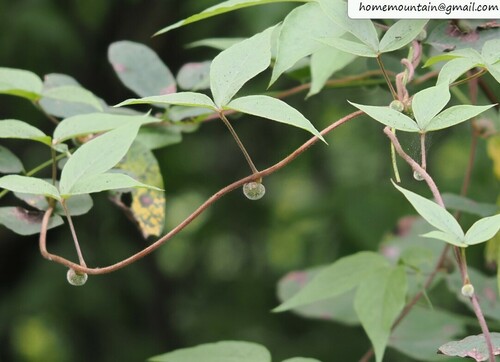
At a glance
- Lifecycle
- Perennial (hardy)
- Exposure
- Full sun
Cultivation
We have very little information on this species and do not know if it will be hardy in Britain. It is unlikely to succeed in any but the mildest areas. The following notes are based on the general needs of the genus. Easily grown in a fertile well-drained soil in a sunny position or light shade. Plants produce tubercles (small tubers that are formed in the leaf axils of the stems), and can be propagated by this means[K]. A climbing plant that supports itself by twining around the branches of other plants. Dioecious. Male and female plants must be grown if seed is required.
Propagation
Seed - sow March to April in a sunny position in a warm greenhouse and only just cover. It germinates in 1 - 3 weeks at 20°c. Prick out the seedlings as soon as they are large enough to handle and grow on in a greenhouse for their first year. Plant out in late spring as the plant comes into new growth. Basal stem cuttings in the summer. Division in the dormant season, never when in growth. The plant will often produce a number of shoots, the top 5 - 10 cm of the root below each shoot can be potted up to form a new plant whilst the lower part of the root can be eaten[K]. Tubercles (baby tubers) are formed in the leaf axils. These are harvested in late summer and early autumn when about the size of a pea and coming away easily from the plant. They should be potted up immediately in individual pots in a greenhouse or cold frame. Plant out in early summer when in active growth[K].
Edible uses
Tuber - cooked.
Medicinal uses
The roots of most, if not all, members of this genus, contains diosgenin.
Habitat
Secondary scrub forests, forest margins and valleys at elevations of 500 - 2900 metres.
Native range
E. Asia - W. China.