Fairybells (Disporum trachycarpum)
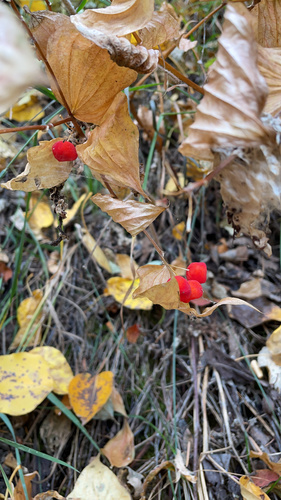
At a glance
- Lifecycle
- Perennial (hardy)
- Exposure
- Full shade
- Frost limit
- −28.9 °C
Cultivation
Best grown in partial shade in a moist peaty or woodland soil. A very hardy plant, tolerating temperatures down to about -20°c. Plants spread well by means of creeping rhizomes when they are grown in a leafy soil. This species is closely related to D. smithii.
Propagation
Seed - best sown in a cold frame as soon as it is ripe. When they are large enough to handle, prick the seedlings out into individual pots and grow them on in the greenhouse for at least their first winter. Plant them out into their permanent positions in late spring or early summer, after the last expected frosts. Division in spring.
Edible uses
Fruit - raw.
Medicinal uses
The seed has been used to clear foreign objects from the eye. A fresh seed was inserted and the eye closed then rubbed until the seed was watered out with the foreign object clinging to it. An infusion of the leaves has been used as a wash for wounds whilst a poultice of the dampened bruised leaves has been applied to bleeding wounds.
Habitat
Wooded slopes, often by streams, or in aspen groves, to 3000 metres.
Native range
Western N. America - British Columbia to N.E. Oregon and south along the Rockies.