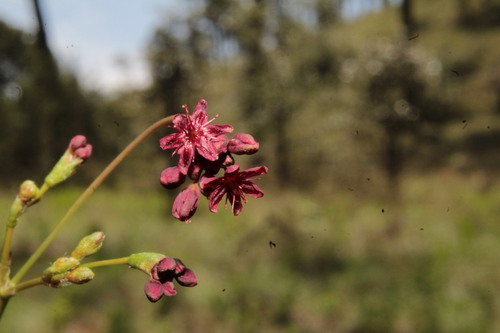
Red buckwheat (Eriogonum atrorubens)
At a glance
- Lifecycle
- Perennial (hardy)
- Exposure
- Full sun
Cultivation
We have very little information on this species and do not know if it will be hardy in Britain. The following notes are based on the general needs of the genus. Requires a loose lean gritty well-drained soil in a very sunny position. Established plants resent root disturbance.
Propagation
Seed - best sown as soon as it is ripe in the autumn in a sandy compost in a greenhouse. Sow stored seed in early spring in a warm greenhouse. As soon as they are large enough to handle, prick the seedlings out into individual pots and grow them on in the greenhouse for at least their first winter. Plant out in late spring or early summer, after the last expected frosts. Division in early spring. Try to obtain divisions from around the edges of the plants without digging up the whole clump. Tease the divisions out with as much root on them as possible and pot them up. Grow them on in light shade in the greenhouse until they are rooting well and plant them out in the summer. Cuttings of greenwood with a heel in the summer.
Edible uses
Root - chewed.
Habitat
Not known
Native range
Southern N. America - Mexico.
Same genus
- Tall woolly buckwheat (Eriogonum elatum)
- Marumleaf buckwheat (Eriogonum marifolium)
- Winged buckwheat (Eriogonum alatum)
- Crispleaf buckwheat (Eriogonum corymbosum)
- Desert trumpet (Eriogonum inflatum)
- Seaside buckwheat (Eriogonum latifolium)
- Longleaf buckwheat (Eriogonum longifolium)
- Slender buckwheat (Eriogonum microthecum)