Adderstongue (Erythronium multiscapoideum)
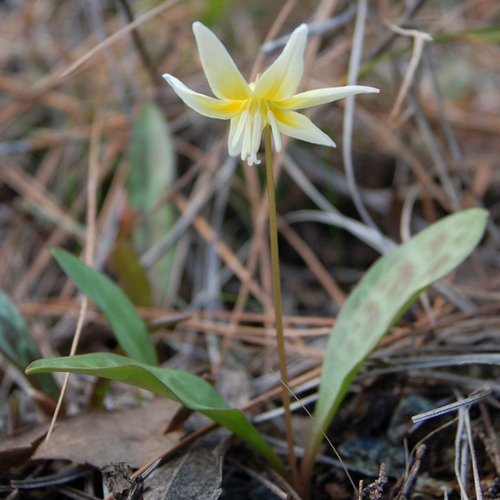
At a glance
- Exposure
- Partial shade
Cultivation
Prefers slightly acid soil conditions but succeeds in chalky soils if these contain plenty of humus. Plants are hardy to at least -15°c. Bulbs should be planted about 7cm deep.
Propagation
Seed - best sown as soon as it is ripe in a shady position in a cold frame. Water lightly in summer, it should germinate in autumn or winter. Sow as early in spring as possible in a cold frame. Sow the seed thinly so that it will not be necessary to prick them out for their first year of growth. Give an occasional liquid feed to the seedlings to make sure that they do not become nutrient deficient. When the plants are dormant, pot up the small bulbs putting 2 - 3 bulbs in each pot. Grow them on in a shady position in the greenhouse for another 2 3 years and then plant them out into their permanent positions when they are dormant in late summer. Division of the bulbs in the summer as the leaves die down. Larger bulbs can be replanted immediately into their permanent positions, but it is best to pot up smaller bulbs and grow them on in a shady position in a greenhouse for a year before planting them out when dormant in late summer.
Edible uses
Although no specific mention has been found for this species, most if not all members of the genus provide edible bulbs[K].
Habitat
Grows on slopes in yellow pine forest and woodlands in the foothills from sea level to elevations of 550 metres.
Native range
Western N. America - Sierra Nevada
Same genus
- White fawnlily (Erythronium albidum)
- Dogtooth violet (Erythronium americanum)
- California fawnlily (Erythronium californicum)
- Cream fawnlily (Erythronium citrinum)
- Coast Range fawnlily (Erythronium elegans)
- Glacier Lily (Erythronium grandiflorum)
- Yellow avalanche-lily (Erythronium idahoense)
- Pacific fawnlily (Erythronium helenae)