Japanese bindweed (Fallopia japonica)
Other names Japanese Knotweed
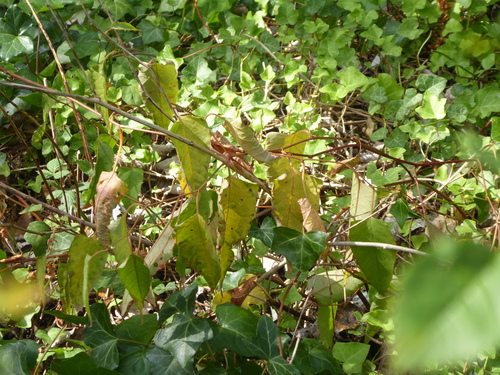
At a glance
- Lifecycle
- Perennial (hardy)
- Exposure
- Full sun
- Frost limit
- −28.9 °C
Cultivation
A very easily grown plant, it succeeds in ordinary garden soil in sun or shade. Japanese knotweed is an extremely invasive plant capable of sending up new shoots at a considerable distance from the main clump and also of growing up through tarmac. Plants seem to be immune to the predations of rabbits. Often cultivated as a dye and a medicinal plant. Very closely related to P. conspicuum. Dioecious, male and female plants must be grown if seed is required.
Propagation
Propagation by seed may be difficult as male plants with fertile pollen are rarely found outside Japan and China. Division in spring or autumn. Very easy, larger divisions can be planted out direct into their permanent positions. We have found that it is better to pot up the smaller divisions and grow them on in light shade in a cold frame until they are well established before planting them out in late spring or early summer.
Edible uses
An excellent source of vitamin A, along with vitamin C and the antioxidant flavonoid rutin. Provides potassium, phosphorus, zinc, and manganese. The shoots are tart and tangy.
Medicinal uses
The Japanese common name for ''F. japonica'' is ''Itadori'', which can be translated as "pain puller" or "removes pain". Extensive research has been done on the plant due to its high levels of resveratrol. The root of ''F. japonica'' is antibacterial, antiviral, antischistosomal, antispriochetal, antifungal, immunostimulant, immunomodulant, anti-inflammatory, angiogensis modulator, central nervous system (brain and spinal cord) relaxant, central nervous system protectant and anti-inflammatory, antioxidant, antiathersclerotic, antihyperlipidemic, antimutagenic, anticarcinogenic, angiogenesis modulator, antineoplastic, vasodilator, antiasthmatic, inhibits platelet aggregation, inhibits eicosanoid synthesis, antithrombotic, tyrosine kinase inhibitor, oncogene inhibitor, antipyretic, cardioprotective, analgesic, antiulcer (slightly reduces stomach acid and protects against stress ulcers), hemostatic, astringent. Called ''Hu zhang'' in traditional Chinese medicine (TCM) ''F. japonica'' is considered bitter, cold and is associated with the liver, gallbladder and lungs ''F. japonica'' is considered a very important herb in the treatment of Lyme disease (Lyme borreliosis) as it specifically addresses the central nervous system and neurological complications of infection, as well as killing the Lyme bacteria itself. '''Contraindicated in pregnancy'''. '''Interactions:''' Caution should be used if taking insulin or other antidiabetic drugs. ''F. japonica'' is considered a safe herb to use regularly and in relatively large doses.
Material uses
A yellow dye is obtained from the root. The plant is potentially a good source of biomass. Plants can be grown to form a ground cover that will exclude all other growth.
Scientific synonyms Reynoutria japonica