Fuchsia colensoi
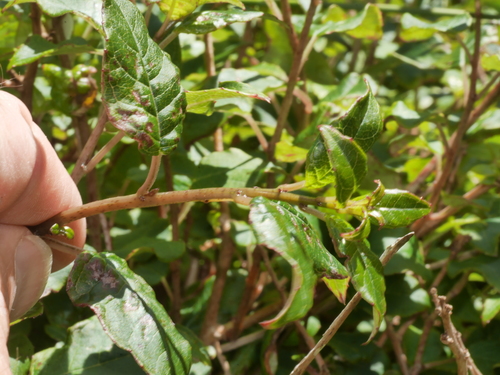
At a glance
- Lifecycle
- Perennial (hardy)
- Exposure
- Full sun
- Frost limit
- −6.7 °C
Cultivation
Succeeds in any fertile well-drained circum-neutral soil. Prefers semi-shade and a sheltered position. Does well in woodland conditions. Plants are only hardy in the mildest parts of Britain, they grow well in Cornwall where they can attain a large size. The young growth in spring, even on mature plants, is frost-tender and so it is best to grow the plants in a position sheltered from the early morning sun[K]. A very variable species, it is closely related to F. excorticata. Plants seem to be immune to the predations of rabbits.
Propagation
Seed - best sown as soon as it is ripe. Germination should take place in less than 6 weeks. Prick out the seedlings into individual pots when they are large enough to handle, and grow them on in the greenhouse for at least their first winter. Plant out in late spring or early summer, after the last expected frosts. Inter-nodal cuttings of greenwood, 5 - 8cm long, May/June in a frame. Quick and easy, a high percentage take[78, K]. Overwinter in the greenhouse for the first year and plant out after the last expected frosts. Inter-nodal cuttings of half-ripe wood, July/August in a frame. Very quick and easy, treat as greenwood cuttings above[K]. Cuttings usually succeed at any time during the growing season[K].
Edible uses
Fruit - raw or cooked. A juicy berry[K], it is sweet but astringent. Sap - sweet. Obtained by cutting a length of branch and sucking out the sap. It is not produced very freely.
Material uses
A purple dye is obtained from the plant (the part is not specified, though it is likely to be the pollen). It makes a good ink. The pollen is bright blue and was used by the Maoris as a face powder. Wood - very strong and durable with an attractive grain, but hard to work. Used for making small items.
Habitat
Not known
Native range
New Zealand.