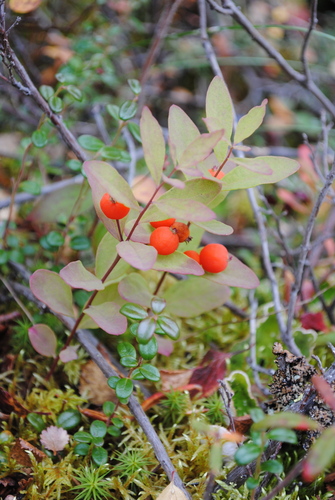
False toadflax (Geocaulon lividum)
Other names earthberry, northern comandra
At a glance
- Lifecycle
- Perennial (hardy)
- Exposure
- Full sun
Cultivation
We have very little information on this species and do not know if it will be hardy in Britain, though judging by its native range it should succeed outdoors in many parts of this country. The plant might be a root parasite[K]. See the plants native habitat for ideas on its cultivation needs.
Propagation
Seed - we have no information for this species but suggest sowing the seed in a greenhouse as soon as it is ripe if this is possible, otherwise in spring in a greenhouse. The plant might be a root parasite, further research is required. When they are large enough to handle, prick the seedlings out into individual pots and grow them on in the greenhouse for at least their first winter. Plant them out into their permanent positions in late spring or early summer, after the last expected frosts.
Edible uses
Fruit. No more details are given.
Medicinal uses
A decoction of the chewed leaves and bark has been used as a purgative.
Habitat
Moss or damp humus.
Native range
Northern N. America - Labrador to Alaska.